


BLOG | Oak Alternatives
What are Oak Chips?
Find out what oak chips are, explore the different wood grades, and find out when is best to use them!
by Brandon Haas
Published on 02/18/2026
ON THIS PAGE
Age your wine with oak chips.
- Shop Now
Oak chips are one of the most widely used oak alternatives in modern winemaking. They provide a practical way to introduce structure, aroma, and complexity into wine without relying exclusively on traditional barrel aging. Because they extract relatively quickly and are easy to measure, oak chips are used by both commercial wineries and small-batch winemakers looking for controlled, predictable results.
Understanding what oak chips are, how they work, and when to use them helps ensure they are applied intentionally rather than experimentally. When used correctly, oak chips can enhance structure, stabilize color, and contribute subtle aromatic complexity while maintaining flexibility in production.
This guide explains how oak chips function in wine, how they differ from other oak formats, and how to use them effectively in a winemaking process.
What are Oak Chips?
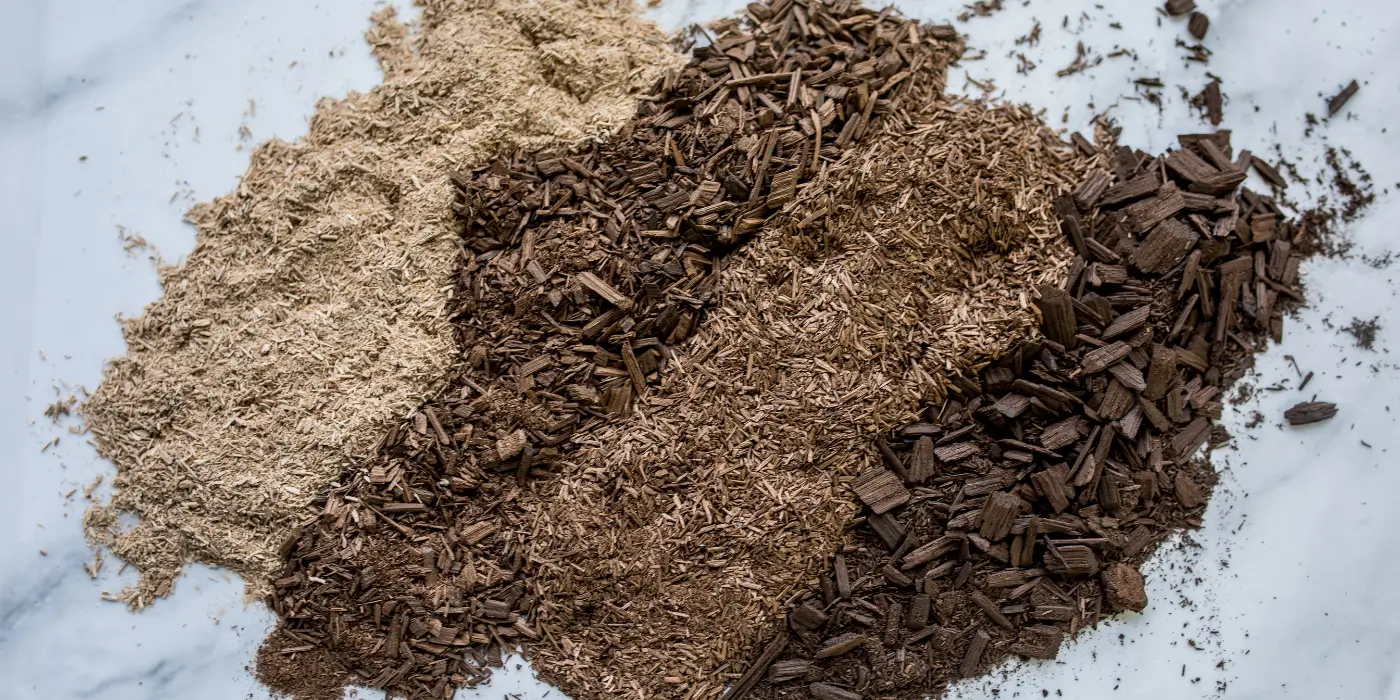
Oak chips are small pieces of toasted wood that are added directly to wine during fermentation or aging. Instead of storing wine inside a barrel, winemakers introduce chips into tanks, carboys, or other vessels so the wine can interact with the wood in a controlled way.
Because oak chips have a relatively high surface area compared to larger formats such as cubes or staves, they extract compounds more quickly. This allows winemakers to introduce oak influence over shorter timeframes and adjust contact time based on tasting.
Oak chips are commonly used to:
- support tannin structure
- enhance mouthfeel
- contribute subtle aroma
- help stabilize color
- refine balance during aging
They can be used alone or alongside other oak alternatives depending on the desired outcome.
Explore our oak chips today!
Get started on your next batch of wine and age with the best using our premium American or French oak chips.
How Oak Chips Influence Wine
When oak chips are added to wine, they begin releasing compounds that influence structure, aroma, and texture. These compounds interact with tannins and other elements in the wine, helping to build complexity over time.
Because of their size, chips tend to extract more quickly than larger oak formats. This makes them useful when a faster integration of oak character is desired or when production timelines are shorter. The ability to remove chips once the desired influence has been reached also allows for careful control over intensity.
Oak chips can influence wine in several ways such as contributing subtle oak aroma, supporting tannin integration, enhancing mouthfeel, helping stabilize color, and more.
The degree of influence depends on factors such as toast level, dosage, and contact time. Monitoring the wine during aging helps ensure the oak integrates in a balanced way.
Types of Oak Chips
Not all oak chips behave the same way. Differences in wood type, toast level, and screening can affect how they interact with wine.
Wood Types
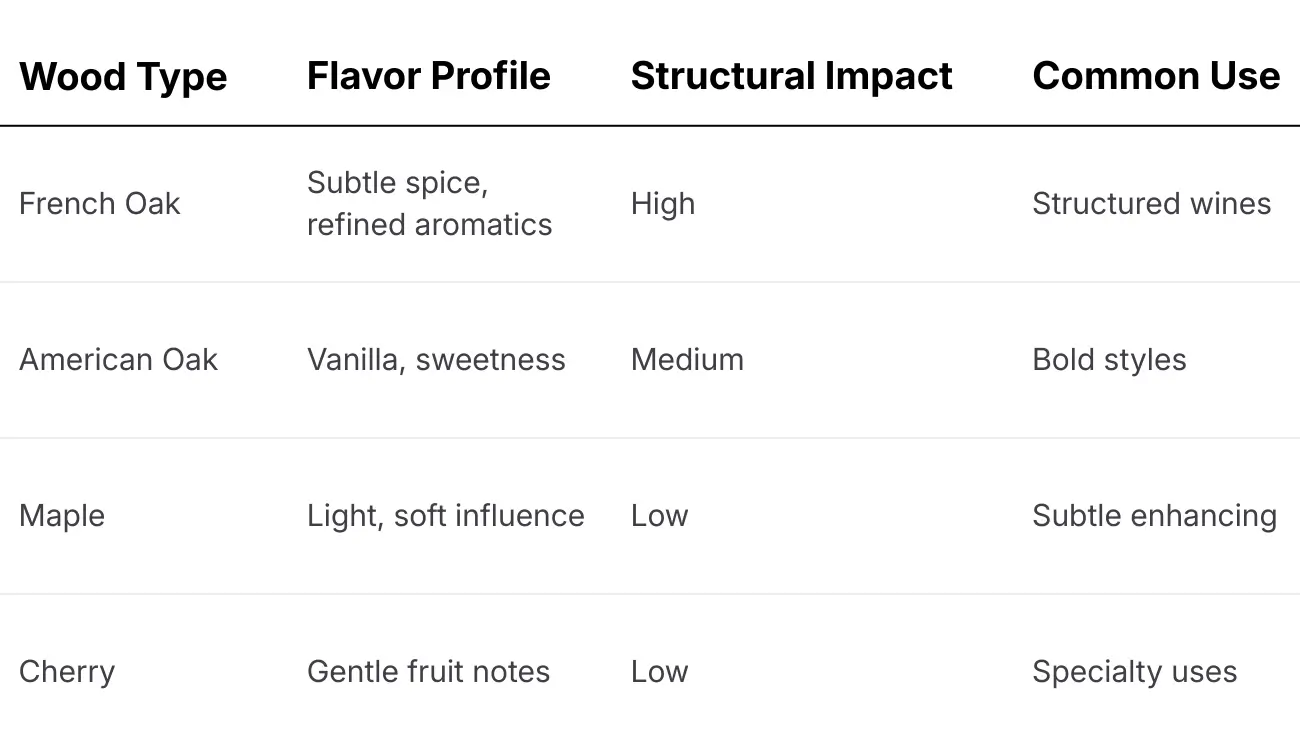
Oak chips are commonly available in several wood types, each contributing different characteristics. French oak is often associated with subtle spice and structure, while American oak tends to contribute more pronounced vanilla notes. Maple and cherry can introduce lighter, more delicate influences.
Toast Levels
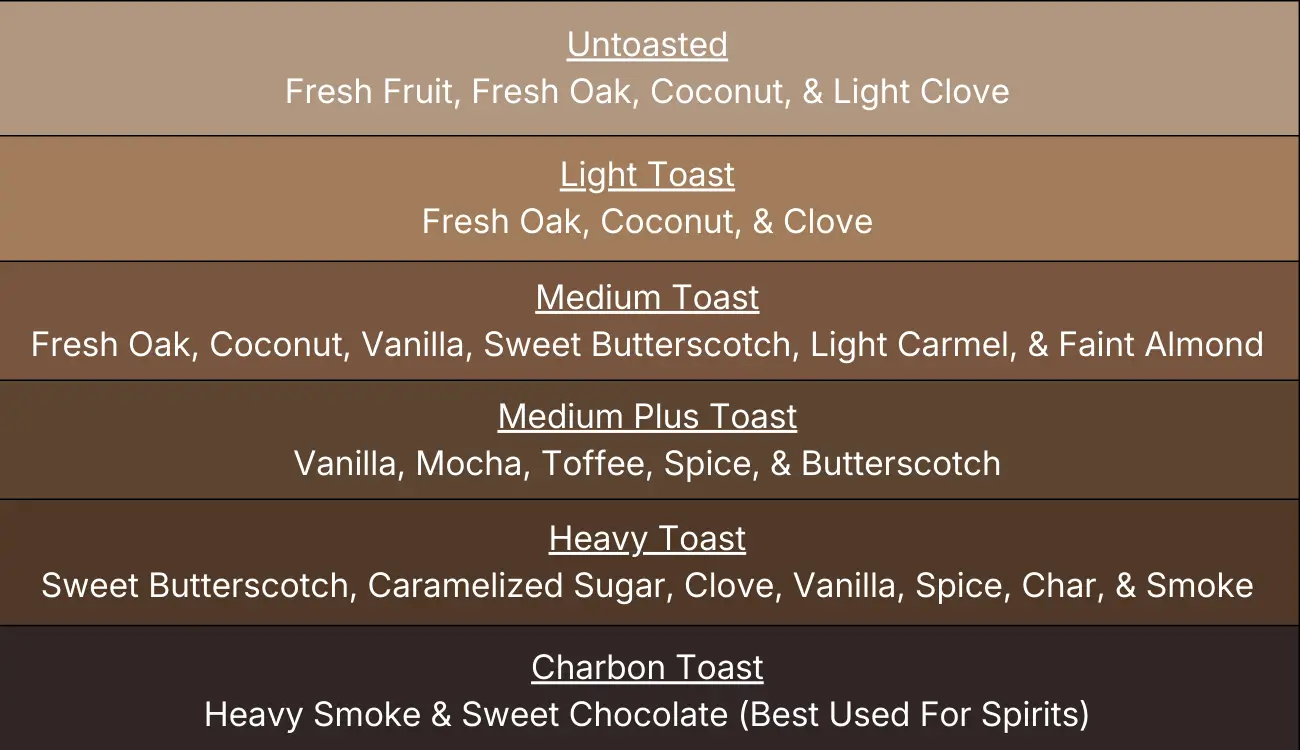
Toast level determines how the wood has been heated and how it will influence aroma and flavor. Lighter toasts tend to emphasize structure, while medium and heavier toasts introduce more aromatic complexity.
Need help deciding which toast level is right for your wine? See How to Choose the Right Toast Level for Your Wine for more detailed information.
Small vs Large Grade Chips
Oak chips are often available in different size grades, most commonly small grade and large grade. While both provide similar oak characteristics, the difference in size affects how quickly compounds are extracted and how they integrate into the wine.
The size of our small grade chips is approximately 0.1" L x 0.4" W x 0.1" H, while our large grade chips are approximately 0.4" L x 0.4" W x 0.1" H.
For more information regarding the difference between small and large grade oak chips, check out What is the Difference Between Small Grade and Large Grade Oak Chips?
Screened vs Unscreened Chips
Screened oak chips have been sorted for consistent size, which helps produce more predictable extraction. Unscreened chips contain a wider range of particle sizes and may extract at slightly different rates.
Many winemakers choose screened chips when consistency is important, particularly in larger batches. Others may use unscreened chips when working with smaller or experimental batches.
Enhance your wine with oak chips!
Explore oak chips available in multiple wood types, toast levels, and screened options for consistent extraction.
When to Use Oak Chips
Oak chips can be added at different stages depending on the desired outcome. Some winemakers introduce them during fermentation to integrate structure early, while others add them during aging to refine balance and aroma.
Each stage produces slightly different effects. Our experts recommend adding both small and large grade oak chips during white and red wine fermentation after pressing and post malolactic fermentation.
Read How You Can Use Oak Chips In Wine for a more detailed look at when to use oak chips.
Oak Chip Dosage Considerations
The amount of oak chips used depends on batch size, wine style, and desired intensity. Because chips extract relatively quickly, many winemakers begin with conservative amounts and adjust based on tasting.
For both small and large grade oak chips, our experts recommend using 7.5-11.5 grams per gallon (2-4 grams per liter).
Download our dosage chart!
Our PDF dosage chart is perfect for determining the exact dosage for your specific batch.
Contact Time and Extraction
Contact time plays a major role in how oak chips influence wine. Because they extract more quickly than larger formats, they are often left in contact for shorter periods. However, the exact timing depends on dosage and desired intensity.
Our experts recommend leaving the chips in contact for several weeks to several months to impart appreciable oak flavor, but regular tasting throughout the aging process helps determine when the oak influence has reached the desired level.
Download our oak chip configuration sheet!
For more in-depth information on contact time and extraction rates during the winemaking process, we recommend exploring our oak chip configuration sheet.
Oak Chips vs Other Oak Formats
Chips may be preferred when a quicker extraction is needed, aging time is limited, or smaller batches are being produced.
Cubes or staves may be preferred when a slower integration is desired, extended aging is planned, or a deeper structure is needed.
To explore more about the different types of oak formats and their extraction rates, see Oak Alternatives for Winemaking: The Complete Guide.
Common Mistakes When Using Oak Chips
Even though oak chips are relatively easy to use, certain mistakes can lead to imbalance. These include using too much at once, leaving chips in contact too long, not tasting during extraction, or choosing the wrong toast level.
Monitoring the wine and making gradual adjustments helps prevent these issues and ensures the oak integrates properly.
Final Thoughts
Oak chips remain one of the most versatile and widely used oak alternatives in winemaking. Their ability to provide controlled extraction and flexible timing makes them useful across a wide range of production styles. When used thoughtfully and monitored carefully, they can help refine structure, enhance aroma, and support overall balance in wine.
Understanding how oak chips function and how they differ from other formats helps ensure they are used intentionally and effectively.
Your wine is waiting on you!
Age your wine today with our premium oak chips.
Oak Chips FAQ
What do oak chips do in wine?
They help influence structure, aroma, and mouthfeel by introducing oak compounds during fermentation or aging.
How long should oak chips stay in wine?
Contact time varies depending on dosage and desired intensity. Regular tasting helps determine when to remove them.
Are oak chips better than barrels?
They serve different purposes. Chips provide flexibility and control, while barrels provide gradual aging. We recommend reading Oak Barrels vs. Oak Alternatives: Which is Better? for more information.
Can oak chips be reused?
Most chips are designed for single use, as their extractable compounds diminish after initial contact.

by Brandon Haas
Published on 02/18/2026
Share Article
POPULAR POSTS
OAK ALTERNATIVES
How Long Should You Age Wine With Oak Chips?
NEWS/UPDATES
The Oak Scoop: February 2026
USING OAK IN WINEMAKING
What is Harvest and Why is it Important to Winemakers?
OAK SCIENCE
5 Ways To Make Your Alcohol Taste Better
by Brandon Haas
Published on 02/18/2026
Unsubscribe anytime. By entering your email, you agree to receive marketing emails from Oak Chips Inc. By proceeding, you agree to the Terms and Conditions and Privacy Policy.
POPULAR POSTS
OAK ALTERNATIVES
How Long Should You Age Wine With Oak Chips?
NEWS/UPDATES
The Oak Scoop: February 2026
USING OAK IN WINEMAKING
What is Harvest and Why is it Important to Winemakers?
OAK SCIENCE
5 Ways To Make Your Alcohol Taste Better
ON THIS PAGE
Age your wine with oak chips.
- Shop Now
Oak chips are one of the most widely used oak alternatives in modern winemaking. They provide a practical way to introduce structure, aroma, and complexity into wine without relying exclusively on traditional barrel aging. Because they extract relatively quickly and are easy to measure, oak chips are used by both commercial wineries and small-batch winemakers looking for controlled, predictable results.
Understanding what oak chips are, how they work, and when to use them helps ensure they are applied intentionally rather than experimentally. When used correctly, oak chips can enhance structure, stabilize color, and contribute subtle aromatic complexity while maintaining flexibility in production.
This guide explains how oak chips function in wine, how they differ from other oak formats, and how to use them effectively in a winemaking process.
What are Oak Chips?
Oak chips are small pieces of toasted wood that are added directly to wine during fermentation or aging. Instead of storing wine inside a barrel, winemakers introduce chips into tanks, carboys, or other vessels so the wine can interact with the wood in a controlled way.
Because oak chips have a relatively high surface area compared to larger formats such as cubes or staves, they extract compounds more quickly. This allows winemakers to introduce oak influence over shorter timeframes and adjust contact time based on tasting.
Oak chips are commonly used to:
- support tannin structure
- enhance mouthfeel
- contribute subtle aroma
- help stabilize color
- refine balance during aging
They can be used alone or alongside other oak alternatives depending on the desired outcome.
Explore our oak chips today!
Get started on your next batch of wine and age with the best using our premium American or French oak chips.
How Oak Chips Influence Wine
When oak chips are added to wine, they begin releasing compounds that influence structure, aroma, and texture. These compounds interact with tannins and other elements in the wine, helping to build complexity over time.
Because of their size, chips tend to extract more quickly than larger oak formats. This makes them useful when a faster integration of oak character is desired or when production timelines are shorter. The ability to remove chips once the desired influence has been reached also allows for careful control over intensity.
Oak chips can influence wine in several ways such as contributing subtle oak aroma, supporting tannin integration, enhancing mouthfeel, helping stabilize color, and more.
The degree of influence depends on factors such as toast level, dosage, and contact time. Monitoring the wine during aging helps ensure the oak integrates in a balanced way.
Types of Oak Chips
Not all oak chips behave the same way. Differences in wood type, toast level, and screening can affect how they interact with wine.
Wood Types
Oak chips are commonly available in several wood types, each contributing different characteristics. French oak is often associated with subtle spice and structure, while American oak tends to contribute more pronounced vanilla notes. Maple and cherry can introduce lighter, more delicate influences.
Toast Levels
Toast level determines how the wood has been heated and how it will influence aroma and flavor. Lighter toasts tend to emphasize structure, while medium and heavier toasts introduce more aromatic complexity.
Need help deciding which toast level is right for your wine? See How to Choose the Right Toast Level for Your Wine for more detailed information.
Small vs Large Grade Chips
Oak chips are often available in different size grades, most commonly small grade and large grade. While both provide similar oak characteristics, the difference in size affects how quickly compounds are extracted and how they integrate into the wine.
The size of our small grade chips is approximately 0.1" L x 0.4" W x 0.1" H, while our large grade chips are approximately 0.4" L x 0.4" W x 0.1" H.
For more information regarding the difference between small and large grade oak chips, check out What is the Difference Between Small Grade and Large Grade Oak Chips?
Screened vs Unscreened Chips
Screened oak chips have been sorted for consistent size, which helps produce more predictable extraction. Unscreened chips contain a wider range of particle sizes and may extract at slightly different rates.
Many winemakers choose screened chips when consistency is important, particularly in larger batches. Others may use unscreened chips when working with smaller or experimental batches.
Enhance your wine with oak chips!
Explore oak chips available in multiple wood types, toast levels, and screened options for consistent extraction.
When to Use Oak Chips
Oak chips can be added at different stages depending on the desired outcome. Some winemakers introduce them during fermentation to integrate structure early, while others add them during aging to refine balance and aroma.
Each stage produces slightly different effects. Our experts recommend adding both small and large grade oak chips during white and red wine fermentation after pressing and post malolactic fermentation.
Read How You Can Use Oak Chips In Wine for a more detailed look at when to use oak chips.
Oak Chip Dosage Considerations
The amount of oak chips used depends on batch size, wine style, and desired intensity. Because chips extract relatively quickly, many winemakers begin with conservative amounts and adjust based on tasting.
For both small and large grade oak chips, our experts recommend using 7.5-11.5 grams per gallon (2-4 grams per liter).
Download our dosage chart!
Our PDF dosage chart is perfect for determining the exact dosage for your specific batch.
Contact Time and Extraction
Contact time plays a major role in how oak chips influence wine. Because they extract more quickly than larger formats, they are often left in contact for shorter periods. However, the exact timing depends on dosage and desired intensity.
Our experts recommend leaving the chips in contact for several weeks to several months to impart appreciable oak flavor, but regular tasting throughout the aging process helps determine when the oak influence has reached the desired level.
Download our oak chip configuration sheet!
For more in-depth information on contact time and extraction rates during the winemaking process, we recommend exploring our oak chip configuration sheet.
Oak Chips vs Other Oak Formats
Chips may be preferred when a quicker extraction is needed, aging time is limited, or smaller batches are being produced.
Cubes or staves may be preferred when a slower integration is desired, extended aging is planned, or a deeper structure is needed.
To explore more about the different types of oak formats and their extraction rates, see Oak Alternatives for Winemaking: The Complete Guide.
Common Mistakes When Using Oak Chips
Even though oak chips are relatively easy to use, certain mistakes can lead to imbalance. These include using too much at once, leaving chips in contact too long, not tasting during extraction, or choosing the wrong toast level.
Monitoring the wine and making gradual adjustments helps prevent these issues and ensures the oak integrates properly.
Final Thoughts
Oak chips remain one of the most versatile and widely used oak alternatives in winemaking. Their ability to provide controlled extraction and flexible timing makes them useful across a wide range of production styles. When used thoughtfully and monitored carefully, they can help refine structure, enhance aroma, and support overall balance in wine.
Understanding how oak chips function and how they differ from other formats helps ensure they are used intentionally and effectively.
Your wine is waiting on you!
Age your wine today with our premium oak chips.
Oak Chips FAQ
What do oak chips do in wine?
They help influence structure, aroma, and mouthfeel by introducing oak compounds during fermentation or aging.
How long should oak chips stay in wine?
Contact time varies depending on dosage and desired intensity. Regular tasting helps determine when to remove them.
Are oak chips better than barrels?
They serve different purposes. Chips provide flexibility and control, while barrels provide gradual aging. We recommend reading Oak Barrels vs. Oak Alternatives: Which is Better? for more information.
Can oak chips be reused?
Most chips are designed for single use, as their extractable compounds diminish after initial contact.
by Brandon Haas
Published on 02/18/2026
Share Article