BLOG | News/Updates
The Oak Scoop: November 2026 Edition
November is here and this month's edition of The Oak Scoop explores split-lot oaking, oak blending strategies, smoking turkey with oak, and upcoming holiday savings at Oak Chips Inc.
by Brandon Haas
Published on 11/06/2026

ON THIS PAGE
Become an oak expert today!
- Shop Now
What If the Most Precise Oak Tool Isn’t More Oak?
At some point in almost every oak program, a winemaker has to make a decision. Do you leave the wine on oak longer, pull it now, or add another treatment? Another option is to avoid putting the entire lot on the same oak program from the start.
Keeping part of the wine unoaked preserves its original fruit and freshness while the treated portion develops additional structure and complexity. This gives winemakers more control over the final blend without committing the entire lot to one treatment.
In November's edition of The Oak Scoop, we're exploring split-lot oaking, combining different oak profiles, and practical blending strategies. We're also taking a seasonal look at smoking turkey with oak and sharing some exciting holiday savings opportunities.
Holiday Sales at OCI
The holiday season is right around the corner, and we're getting ready to bring you some exciting savings at Oak Chips Inc.!
From Black Friday and Cyber Monday to Christmas, we're preparing special offers with savings of up to 30% off through our online store. Whether you're stocking up on your favorite oak alternatives, experimenting with new products, or shopping for the wine and spirits enthusiasts on your list, there will be plenty to look forward to.
Stay tuned for official announcements, promotional details, and holiday savings!
Beyond the Barrel: Smoking Your Thanksgiving Turkey With Oak
Oak isn't just useful for enhancing what's in your wine glass. It can also bring something special to the Thanksgiving table.
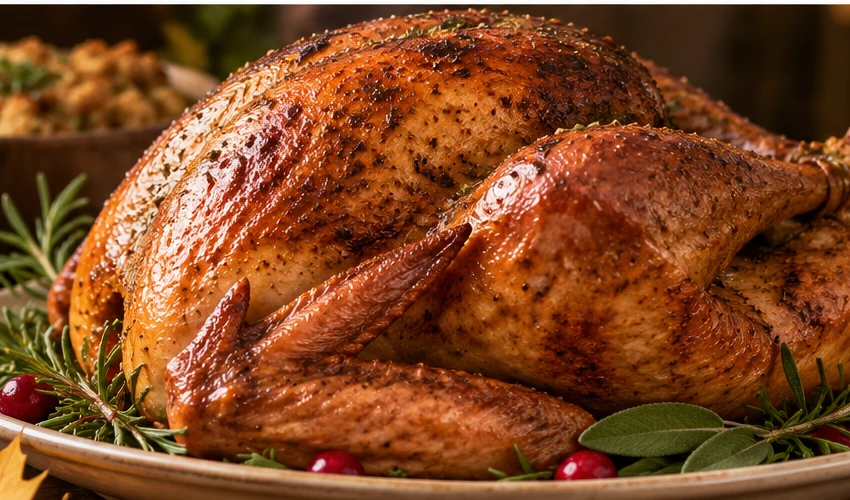
Oak produces a distinctive, moderately strong smoke that pairs well with poultry when used carefully. It can introduce subtle earthy and smoky characteristics, but too much exposure may overpower turkey's relatively mild flavor.
For smoking, always use untreated hardwood specifically intended for cooking, rather than assuming winemaking oak products are suitable as smoking fuel.
And here's something interesting for winemakers: an oak-smoked turkey doesn't necessarily call for a heavily oaked wine. A fruit-forward Pinot Noir or lightly oaked Chardonnay can provide a pleasant contrast without overwhelming the meal with additional smoke or toast character.
Whether you're cooking or winemaking, the same principle applies: oak should complement the main ingredient rather than overpower it.
For food safety, smoked turkey should reach an internal temperature of 165°F.
From everyone at OCI, we wish you a wonderful Thanksgiving!
Oak Lab: Leave Yourself Something to Blend With
Treating an entire tank with oak gives you one result to work with. Splitting the lot gives you more options.
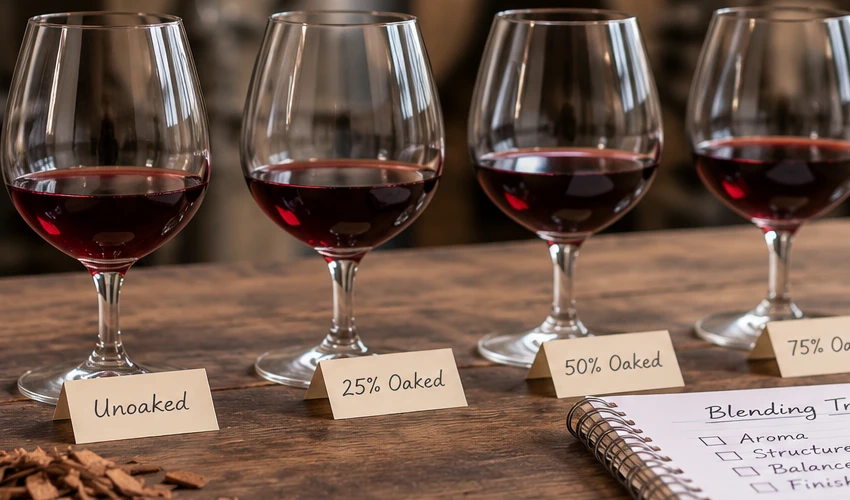
The approach is simple: keep one portion untreated and oak another. Once both have developed, bring them back to the blending bench and test different ratios.
Maybe the oaked portion has excellent structure and spice, but the toast is slightly stronger than you'd like. If you retained some unoaked wine, you can test blends such as 90/10, 80/20, or 70/30 to find the right balance.
Instead of relying entirely on contact time to achieve the perfect oak profile, you're giving yourself another way to control the final result.
Oak Spotlight: Complexity Can Start Before the Blending Bench
Fusion Oak Chips
Blending doesn't have to happen only between separate lots of wine. You can also build complexity through the oak treatment itself.
OCI's Fusion Oak Chips combine two toast levels within the same oak species. This allows winemakers to layer different toast characteristics, such as vanilla and caramel alongside roasted spice, smoke, or deeper toasted notes.
We recommend starting around 2–4 g/L (7.5–15 g/gal) with approximately 1–3 weeks of contact, followed by regular sensory evaluation.
The goal isn't simply adding more flavor. It's selecting complementary toast profiles that work with the wine you're producing.
Ask OCI: French or American Oak?
It's one of the most common questions we hear, and the answer depends on more than the wood's origin.
American oak is often associated with more pronounced vanilla, coconut, caramel, and sweet wood characteristics, while French oak generally offers more restrained oak expression, spice, and structural integration. However, toast and format can change those characteristics considerably.
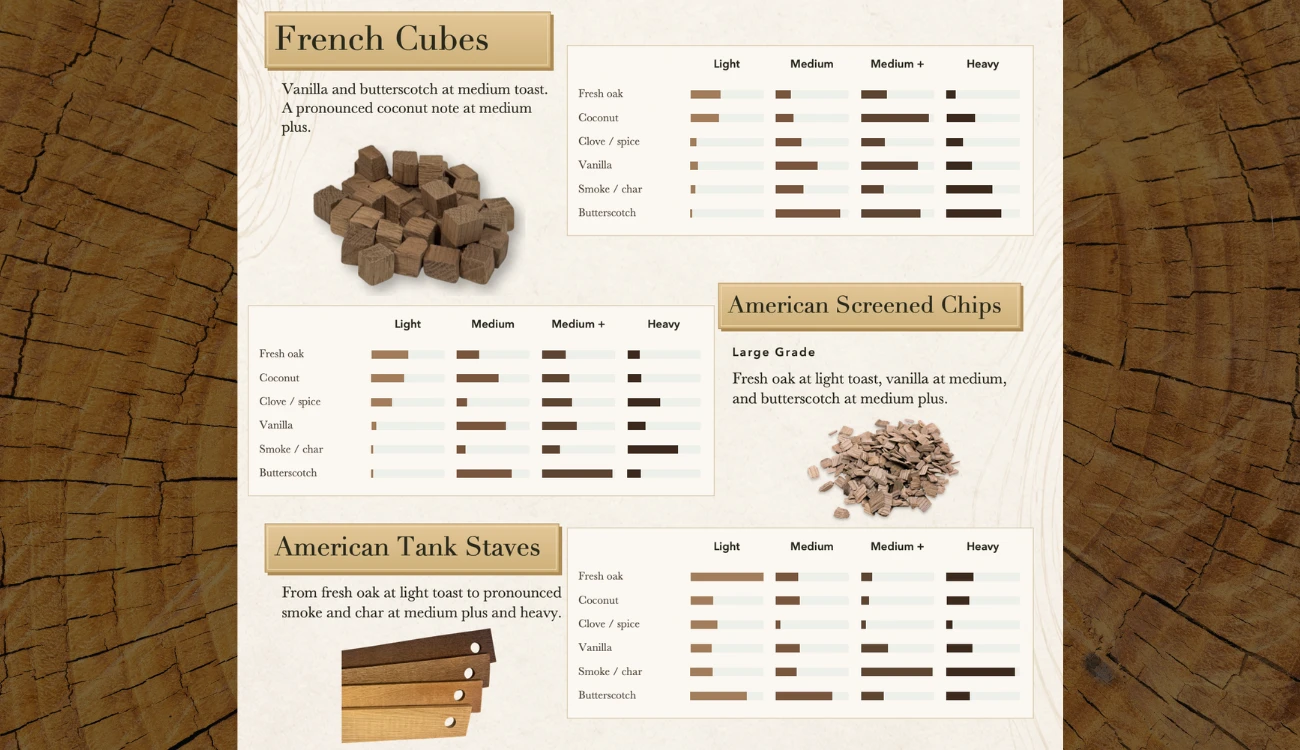
For example, OCI's French Oak Cubes can develop vanilla and butterscotch notes at Medium toast and a pronounced coconut character at Medium Plus. Our American Large Screened Chips can shift from fresh oak at Light toast toward vanilla at Medium and butterscotch at Medium Plus.
Your wine style matters, too. A Cabernet Sauvignon may benefit from French oak or a combination of French and American, while a fruit-forward Chardonnay may call for lighter French oak that introduces complexity without overpowering its natural character.
Start with the wine you want to create, then select the oak that helps you get there.
From the Blending Bench: Don’t Search for the “Oakiest” Sample
When running an oak blending trial, it's easy to focus too much on the oak itself.
Instead, evaluate each sample as though it were the finished wine. Which blend preserves the clearest fruit character? Which has the best mid-palate? Where does the oak become too noticeable? Which finish is the most balanced?
Always include the fully unoaked and fully oaked samples for comparison. They help establish the range you're working within and make it easier to understand what each component contributes.
You might discover that the best blend contains significantly less oak than expected. That's exactly why we run the trial.
Two Ways to Order. Your Wine, Your Way.
Whether you're preparing a commercial oak trial, restocking your cellar, or experimenting with a small batch at home, we want to make finding the right oak as easy as possible.
Shop Online: Visit www.oakchipsinc.com/shop to browse our collection, compare product formats, review toast information, and purchase directly through our website.
Work With OCI: Our team can assist with bulk pricing, product recommendations, custom applications, and designing an oak trial that fits your production goals.
Not sure where to begin? We also offer complimentary samples, with product selections and quantities coordinated individually.
Visit our Website Today!
Shop oak alternatives online: www.oakchipsinc.com
Request Samples: sa*****@*********nc.com
Contact Our Team: 740-947-4159 | in**@*********nc.com
Featured Resource: How to Blend Oaked and Unoaked Wine
Interested in trying a split-lot oak program?
Our featured guide, "How to Blend Oaked and Unoaked Wine," explains why wineries use this technique, how to prepare controlled blending trials, and how different ratios can help preserve fruit while introducing targeted oak complexity.
One of the simplest things you can do is prepare several measured blends and evaluate them blind. The blend you expect to prefer isn't always the one that works best.
That's why we trial before we scale.
Until Next Month
Blending gives winemakers something increasingly valuable as a wine develops: options. Keeping separate components allows you to make final decisions with more information, helping you manage oak intensity, fruit character, and structure without committing the entire lot too early.
The team at Oak Chips Inc. would like to thank you for reading November's edition of The Oak Scoop. We hope everyone has a wonderful Thanksgiving and enjoys the upcoming holiday season.
Next month, we'll explore another oak decision that's often oversimplified: toast levels. We'll look beyond Light, Medium, Medium Plus, and Heavy and examine what heat is actually doing to the wood, and ultimately, your wine.
Until then, Happy Oaking!
Let our team choose the right oak for your winemaking or brewing project!
Reach out to our team or explore our wide selection of premium American and French oak barrel alternatives to enhance your beverages while also saving money compared to relying solely on traditional barrel aging!

by Brandon Haas
Published on 11/06/2026
Share Article
POPULAR POSTS
OAK ALTERNATIVES
How Long Should You Age Wine With Oak Chips?
NEWS/UPDATES
The Oak Scoop: May 2026
USING OAK IN WINEMAKING
What is Harvest and Why is it Important to Winemakers?
OAK SCIENCE
5 Ways To Make Your Alcohol Taste Better
by Brandon Haas
Published on 11/06/2026
Unsubscribe anytime. By entering your email, you agree to receive marketing emails from Oak Chips Inc. By proceeding, you agree to the Terms and Conditions and Privacy Policy.
POPULAR POSTS
OAK ALTERNATIVES
How Long Should You Age Wine With Oak Chips?
NEWS/UPDATES
The Oak Scoop: May 2026
USING OAK IN WINEMAKING
What is Harvest and Why is it Important to Winemakers?
OAK SCIENCE
5 Ways To Make Your Alcohol Taste Better