
BLOG | Oak Alternatives
Oak Chips vs. Oak Cubes: Which Should You Use?
Oak chips work fast and oak cubes work slowly. Here is how to choose the right format for your wine.
by Brandon Haas
Published on 11/03/2026
ON THIS PAGE
Become an oak expert today!
- Shop Now
Oak chips and oak cubes both add oak character to wine without a barrel. The difference is speed and control. Chips work fast. Cubes work slowly. Which one fits depends on how much time you have and what you want the oak to do.
This guide compares the two formats side by side so you can pick the right one for your next batch.
The Short Answer
•Choose oak chips when you want oak influence quickly, or when the wine will be bottled soon.
•Choose oak cubes when the wine will age longer and you want the oak to integrate gradually.
•If you are unsure, start conservatively with either format and taste on a schedule.
How Oak Chips Work
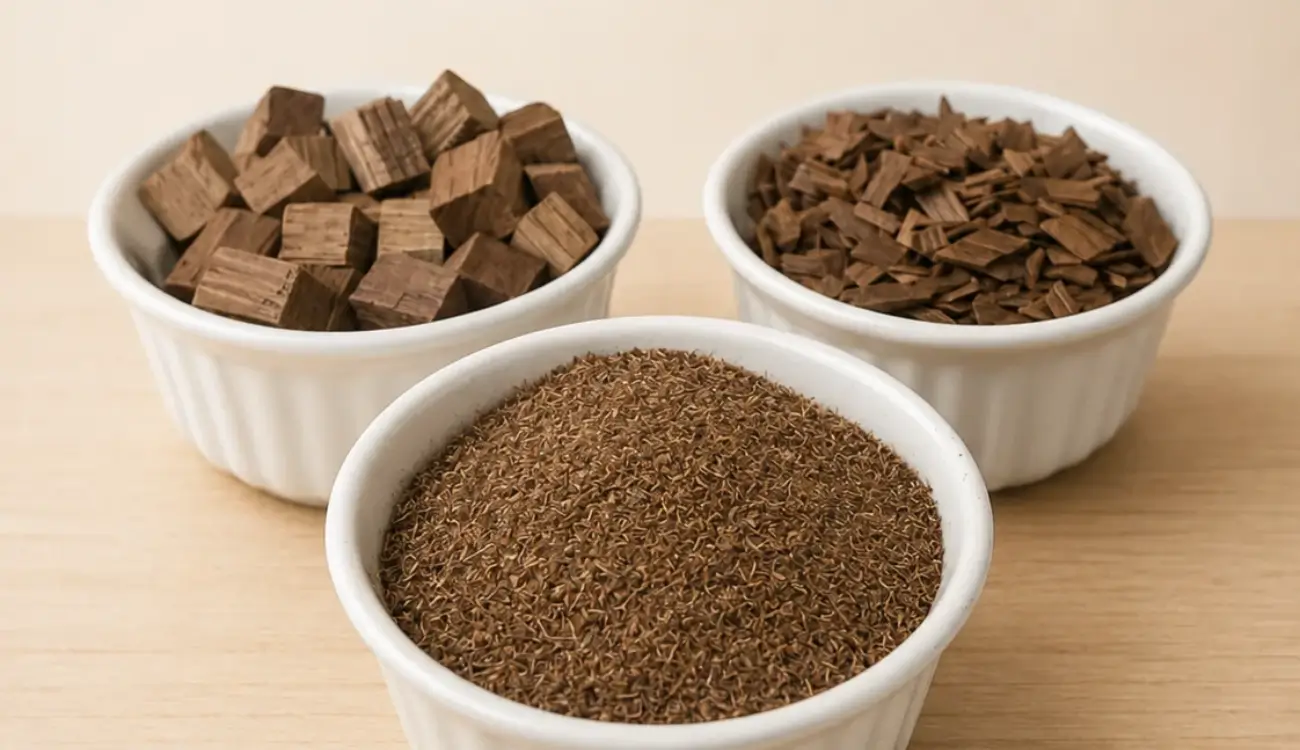
Oak chips are small pieces of toasted oak with a lot of exposed surface area. That surface area is why they extract quickly. Flavor, aroma, and tannin enter the wine early in the contact period.
Because extraction is fast, chips are easy to over-do if you do not taste often. They are a good fit for wines with a short timeline and for winemakers who want quick feedback.
How Oak Cubes Work
Oak cubes are larger than chips, so they have less surface area relative to their size. Extraction happens more slowly and more evenly. The oak tends to build in the background rather than showing up all at once.
Cubes are a good fit for wines that will spend longer in tank or carboy, and for styles where you want structure and integration more than an obvious oak note.
Chips vs. Cubes Side by Side
•Extraction speed: chips are fast; cubes are gradual.
•Contact time: chips suit shorter programs; cubes suit longer aging.
•Oak profile: chips can show oak quickly and boldly; cubes tend to give a more integrated, subtle profile.
•Margin for error: chips need closer monitoring; cubes give more time between tastings.
•Removal: both should be used in a mesh bag or other container you can pull out easily.
When to Use Oak Chips
•Wines that will be bottled within a short window.
•Adding oak during fermentation or early aging.
•Quick trials, when you want to learn how a toast level tastes in your wine.
•Fixing a wine that needs more oak character before release.
When to Use Oak Cubes
•Reds and other wines that will age for an extended period.
•Building structure and mouthfeel over time.
•Programs where you can only taste occasionally.
•Replacing or extending barrel aging without a fast, obvious oak hit.
Wood Type and Toast Still Matter
Format controls speed. Wood type and toast control flavor. OCI offers both chips and cubes in American and French oak, in several toast levels.
•American oak is generally associated with more pronounced vanilla and sweetness.
•French oak is generally associated with subtle spice and refined structure.
•Lighter toasts emphasize structure; medium and heavier toasts add more aromatic complexity.
For more detail, see French Oak vs. American Oak: Which Should You Choose? and How Toast Levels Affect Aroma, Flavor, and Color in Wine.
How Much to Use
Dosage depends on the format, the wine, and your goal. Chips and cubes are not interchangeable gram for gram, because they extract at different speeds. Start with OCI's current published guidance for the product you choose, begin at the low end, and adjust after tasting.
For the full method, read How Much Oak Should You Add to Wine?
Can You Use Both?
Yes. Some winemakers use chips early for quick oak character and cubes later for slower integration. If you combine formats, track each addition separately and taste more often, since the effects stack.
FAQ
Are oak cubes better than oak chips?
Neither is better. Chips are faster; cubes are slower and more gradual. Pick the one that matches your timeline.
Do oak cubes and oak chips taste different?
The wood type and toast drive the flavor. The format mostly changes how fast and how strongly that flavor shows up.
Can I swap cubes for chips in a recipe?
Not one-for-one. Because extraction speed differs, the amount and contact time need adjusting. Use the product's published guidance and taste regularly.
How do I know when to remove the oak?
Taste on a regular schedule. Remove the oak when the wine reaches the balance you want, slightly before it seems finished, since oak character keeps settling after removal.
Can I reuse oak chips or cubes?
Most of the extractable character is used up in the first use.
Related Guides
•French Oak VS American Oak: Which Should You Choose?
Let our team choose the right oak for your winemaking or brewing project!
Reach out to our team or explore our wide selection of premium American and French oak barrel alternatives to enhance your beverages while also saving money compared to relying solely on traditional barrel aging!

by Brandon Haas
Published on 11/03/2026
Share Article
POPULAR POSTS
OAK ALTERNATIVES
How Long Should You Age Wine With Oak Chips?
NEWS/UPDATES
The Oak Scoop: May 2026
USING OAK IN WINEMAKING
What is Harvest and Why is it Important to Winemakers?
OAK SCIENCE
5 Ways To Make Your Alcohol Taste Better
by Brandon Haas
Published on 11/03/2026
Unsubscribe anytime. By entering your email, you agree to receive marketing emails from Oak Chips Inc. By proceeding, you agree to the Terms and Conditions and Privacy Policy.
POPULAR POSTS
OAK ALTERNATIVES
How Long Should You Age Wine With Oak Chips?
NEWS/UPDATES
The Oak Scoop: May 2026
USING OAK IN WINEMAKING
What is Harvest and Why is it Important to Winemakers?
OAK SCIENCE
5 Ways To Make Your Alcohol Taste Better