
BLOG | Uncategorized
The Oak Scoop: October 2026
October’s edition of The Oak Scoop explores oak integration, oak segments, wine structure, cellar diagnostics, and how winemakers can determine when oak is the right corrective tool.
by Brandon Haas
Published on 10/09/2026
ON THIS PAGE
Become an oak expert today!
- Shop Now
Welcome to The Oak Scoop, our monthly newsletter dedicated to keeping our customers informed on company updates, industry developments, product education, and the science behind oak in winemaking.
There's a familiar moment in the cellar when a wine simply doesn't feel complete. The fruit may be there, but the mid-palate falls away. The finish may seem short, the acidity may stand out more than expected, or the aromatics may feel less developed than they did a few weeks earlier. At that point, adding more oak can feel like an obvious solution. Sometimes it is. Other times, it simply gives the original problem another flavor.
That distinction is the focus of October's edition of The Oak Scoop. This month, we're looking at the difference between oak intensity and true integration, where segments fit into a longer aging program, when oak can genuinely help a thin wine, and why certain aromas that seem oak-derived may actually point to a completely different cellar issue.
Oak Lab: More Oak or More Time?
A wine can show plenty of vanilla, toast, spice, or smoke and still feel disconnected on the palate. That is because oak intensity and oak integration are not the same thing.
Intensity is relatively easy to identify. It describes how noticeable the oak is. Integration is more subtle; it describes how naturally that oak fits alongside the fruit, acid, alcohol, tannin, and overall structure of the wine.
Increasing dosage may make the oak more obvious, but it does not guarantee a more cohesive wine. Different oak compounds also develop on different timelines. Toast-derived aromatics may appear relatively early, while tannin contribution, mouthfeel, and broader structural integration can continue evolving over a longer contact period. That means a wine may already smell sufficiently oaked while still needing time to come together.
Before increasing the dose, taste beyond the nose. Is the fruit still clearly defined? Does the mid-palate feel fuller than it did two weeks ago? Is the tannin becoming part of the wine, or does it still feel separate? Is the finish developing? Sometimes the right cellar move is not another oak addition. Sometimes it is simply another month.
Oak Spotlight: When the Wine Has Months, Choose
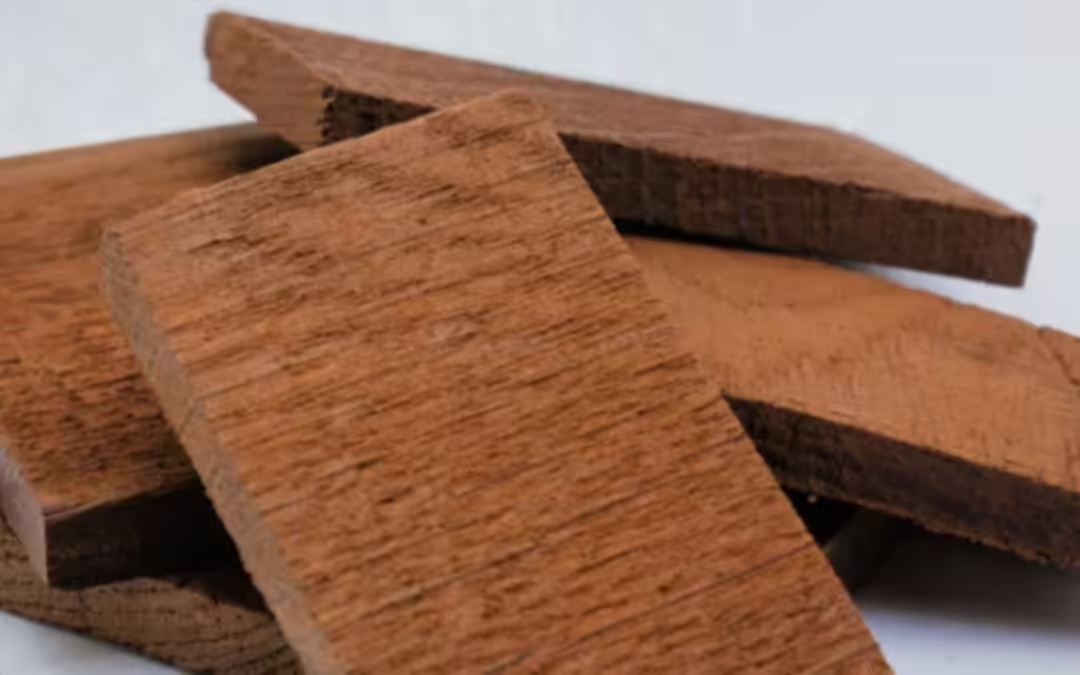
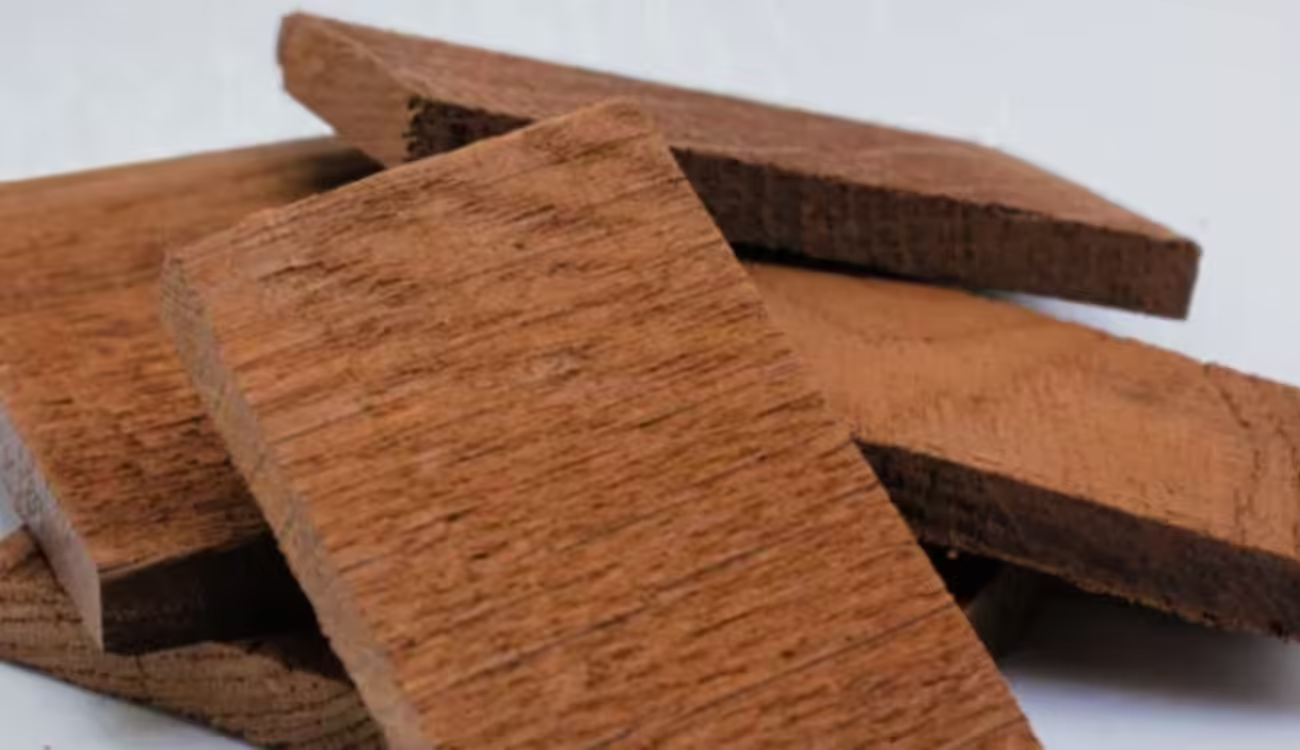
Oak Segments
Oak segments are useful when the goal is development rather than immediate correction. Compared with smaller formats such as chips, their larger size allows extraction to occur more gradually. This gives the wine additional time to develop structure, mouthfeel, aromatic complexity, and a more integrated finish without relying on a quick burst of oak character.
OCI recommends a starting dosage of approximately 6–8 g/L (23–30 g/gal), with a typical contact period of roughly 5–8 months, depending on the wine and desired result. Regular sensory evaluation should still guide the final contact time.
That timeline is what makes segments different from simply using "more chips." They are a separate technical tool designed for a slower aging curve. If the wine needs a quick aromatic adjustment, there are faster options. If it is already heading in the right direction but needs time to build depth and structure, segments begin to make much more sense.
Ask OCI: Can Oak Fix a Thin Wine?
Sometimes it can, but first you have to define what "thin" actually means. One winemaker may use the term to describe a weak mid-palate. Another may mean the wine has little tannin, a short finish, excessive acidity, or simply not enough aromatic complexity. Those problems may feel similar in the glass, but they do not necessarily have the same solution.
Oak can contribute tannin, aroma, texture, and perceived volume, so the right treatment may absolutely improve a wine that lacks structure or depth. However, mouthfeel is influenced by the entire wine matrix, including acidity, alcohol, pH, phenolics, tannins, polysaccharides, and the concentration of the fruit itself. If the underlying problem is dilution, oxidation, microbial spoilage, excessive acidity, or weak fruit concentration, oak may only change the way the problem presents itself. You can end up with the same thin wine, just with more vanilla.
That is why a bench trial matters. Treat a small portion of the wine, keep an untreated control beside it, and allow enough time for the treatment to develop. When you evaluate the samples, don't ask whether the oak is noticeable. Ask whether the wine is actually better.
A Five-Minute Cellar Diagnosis
Before selecting an oak treatment, it helps to break the wine into a few simple sensory questions. Our experts recommend these questions to guide your oak decision, not necessarily as questions that will give you an exact answer.
Start with the nose.
Does the wine genuinely lack aromatic complexity, or is it simply young and closed? Oak can add another aromatic layer, but it cannot turn weak fruit into expressive fruit.
Move to the attack.
What happens when the wine first hits the palate? If acidity or alcohol immediately dominates, introducing more wood may simply add another competing element rather than restoring balance.
Pay attention to the mid-palate.
Does the wine feel hollow between the initial fruit and the finish? This is one area where carefully selected oak may contribute useful texture, tannin, and perceived volume.
Then evaluate the finish.
A short finish is very different from a long finish dominated by bitterness, dryness, or harsh tannin. Those wines should not receive the same treatment.
Finally, step away from the technical descriptors for a moment and ask a much simpler question: Would you actually want another glass? It is easy to become so focused on correcting one characteristic that the wine as a whole gets lost in the process.
October's Oak Myth
MYTH: Heavy Toast Can Hide a Flawed Wine
FACT: Toast Level Alone Cannot Make Up For Flaws
There is some logic behind the idea. Heavy toast can contribute powerful aromas associated with smoke, roasted coffee, dark chocolate, char, and spice. In sufficient amounts, those characters may compete with something undesirable already present in the wine.
The problem is that competition is not correction. Heavy toast does not remove oxidation, volatile acidity, microbial spoilage, sulfur problems, or other underlying faults. In fact, adding more intense toast character may make diagnosis more difficult by introducing another strong sensory element.
You may find yourself wondering whether the smoky or spicy note you are tasting came from the oak or from something else entirely. That brings us to an important cellar distinction.
Health & Safety Lens: Is That Smoky Aroma Really
the Oak?
Not every smoky or spicy aroma in wine comes from toast. Brettanomyces can produce volatile phenols associated with descriptors such as smoky, spicy, medicinal, leathery, barnyard-like, or animal. Depending on the wine, some of those characteristics can overlap with the language used to describe heavily toasted oak.
That makes diagnosis important. If an unexpected smoky, spicy, or phenolic character begins developing, increasing oak dosage should not be the automatic response.
Oak is a sensory and structural tool. It does not replace sanitation, microbial monitoring, appropriate SO2 management, analytical testing, or good cellar hygiene. This is also a more credible way to approach the growing consumer conversation around health and alcohol. Oak does not make wine "healthy," and it should never be positioned that way. What producers can communicate is that the wine was made carefully, monitored appropriately, and honestly represented. For increasingly ingredient- and process-conscious consumers, that transparency matters.
Learn more about Brettanomyces →
Featured Resource: Before You Fix the Wine, Read This
A wine feels flat. Another lacks structure. Another has plenty of fruit but no finish. Which one actually needs oak?
This month's featured resource, "Wine Problem Solving: How to Fix Common Winemaking Problems With Oak," looks at situations where oak alternatives can play a meaningful role in addressing body, tannin balance, complexity, depth, mouthfeel, and overall sensory development.
Just as importantly, the guide explains where oak is not the answer. Oak cannot rescue spoiled fruit, reverse a failed fermentation, sanitize contaminated wine, or make fundamental production problems disappear. What it can do is give the winemaker another precise tool when the issue is structural or sensory and the desired outcome is clearly defined. The process should always follow the same order: Diagnose the problem. Define what needs to change. Then select the oak treatment. Not the other way around.
Read the wine problem solving guide here →
Until Next Month!
Good winemaking often comes down to restraint, observation, and knowing which tool fits the problem in front of you. Oak can be incredibly effective, but its best results come when the treatment is chosen with a clear purpose.
Next month, we'll continue that conversation by exploring blending as a precision tool, specifically how oaked and unoaked lots can be evaluated and combined to fine-tune intensity, structure, and balance.
Thanks for reading October's edition of The Oak Scoop. We'll see you in November. Happy Oaking!
Let our team choose the right oak for your winemaking or brewing project!
Reach out to our team or explore our wide selection of premium American and French oak barrel alternatives to enhance your beverages while also saving money compared to relying solely on traditional barrel aging!

by Brandon Haas
Published on 10/09/2026
Share Article
POPULAR POSTS
OAK ALTERNATIVES
How Long Should You Age Wine With Oak Chips?
NEWS/UPDATES
The Oak Scoop: May 2026
USING OAK IN WINEMAKING
What is Harvest and Why is it Important to Winemakers?
OAK SCIENCE
5 Ways To Make Your Alcohol Taste Better
by Brandon Haas
Published on 10/09/2026
Unsubscribe anytime. By entering your email, you agree to receive marketing emails from Oak Chips Inc. By proceeding, you agree to the Terms and Conditions and Privacy Policy.
POPULAR POSTS
OAK ALTERNATIVES
How Long Should You Age Wine With Oak Chips?
NEWS/UPDATES
The Oak Scoop: May 2026
USING OAK IN WINEMAKING
What is Harvest and Why is it Important to Winemakers?
OAK SCIENCE
5 Ways To Make Your Alcohol Taste Better