
BLOG | Uncategorized
Why Oak Seasoning and Storage Matters for Wine Quality
Understanding seasoning — what it is, why it matters, and how to verify that the products you purchase have been through it properly — is one of the most practically useful pieces of knowledge a winemaker can have about their oak supplier.
by Brandon Haas
Published on 09/08/2026
ON THIS PAGE
Become an oak expert today!
- Shop Now
Of all the steps in the production chain between a forest and your tank, seasoning is the one with the greatest impact on the final quality of the wine — and the one that is most frequently compromised to reduce production costs and timelines.
Properly seasoned oak produces wine with softer, more integrated tannin character and more nuanced aromatic complexity. Inadequately seasoned oak produces wine with harsh, bitter, astringent character that is difficult to correct regardless of dosage, contact time, or format. Understanding seasoning — what it is, why it matters, and how to verify that the products you purchase have been through it properly — is one of the most practically useful pieces of knowledge a winemaker can have about their oak supplier.
What Is Oak Seasoning?
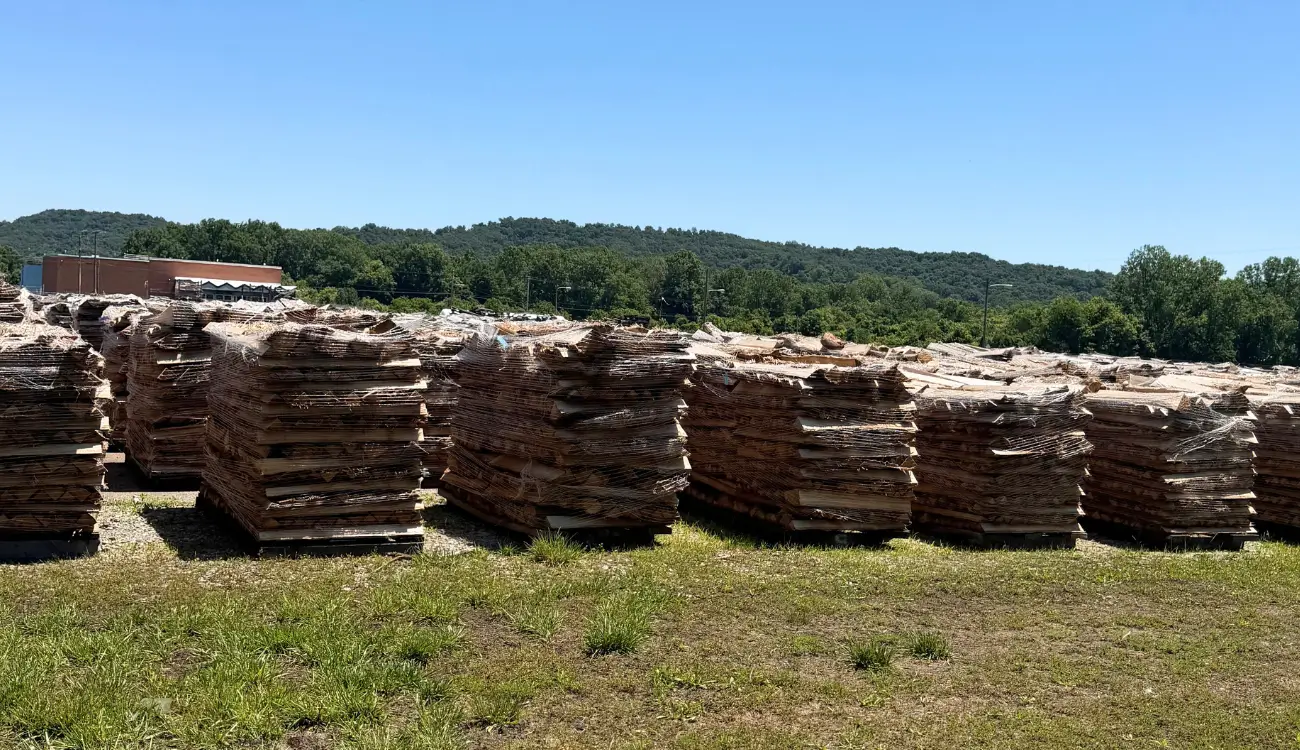
Seasoning is the process of drying freshly processed oak outdoors over an extended period — typically 24–36 months — before toasting and final production. The wood is stacked in open-air facilities in a way that allows rain, sun, wind, and natural humidity cycles to interact with the wood throughout the seasoning period.
This is not simply a drying process. The chemical transformations that occur during outdoor seasoning are what produce the sensory qualities that distinguish premium oak from commodity alternatives.
The Chemistry of Seasoning — What Actually Happens
Two distinct chemical processes occur simultaneously during outdoor seasoning. Both are essential to product quality.
Tannin leaching
Fresh-cut oak contains high concentrations of ellagitannins in their most reactive, astringent forms. When rain contacts the wood surface, it dissolves and carries away the most soluble, most astringent tannin fractions — a natural leaching process that progresses from the wood surface inward over the seasoning period.
The tannins that remain after adequate seasoning are the more complex, less reactive forms — the ellagitannins that produce smooth, integrated structural contribution in wine rather than harsh astringency. This is why properly seasoned oak contributes refined tannin character while inadequately seasoned oak produces bitterness.
The leaching process is irreplaceable. Kiln-drying removes moisture but does not replicate the selective tannin leaching of outdoor exposure. Only rain and time produce the specific tannin profile that proper seasoning delivers.
Aromatic precursor development
During outdoor seasoning, the wood's complex organic compounds undergo a series of slow, low-temperature transformations driven by microbiological activity, UV exposure, and moisture cycling. These transformations convert some of the wood's raw phenolic compounds into more complex aromatic precursors.
When the seasoned wood is subsequently toasted, these pre-developed aromatic precursors yield a broader, more nuanced range of flavor compounds than would be produced from inadequately seasoned wood at the same toast temperature. The difference is perceptible in the wine: properly seasoned oak delivers more complex, integrated aromatic contribution than its kiln-dried equivalent.
Outdoor Seasoning vs. Kiln-Drying
The premium oak industry has always relied on outdoor air-drying. In recent decades, kiln-drying has emerged as a cost-driven alternative that dramatically reduces the time and space required for seasoning. Understanding the difference is important for evaluating suppliers.
| Factor | Outdoor Seasoning | Kiln-Drying |
| Duration | 24-36+ months | Days to weeks |
| Tannin leaching | Yes, progressive and selective | No, moisture is removed, tannins retained |
| Aromatic development | Yes, complex precursor transformation | Minimal, insufficient time |
| Cost to producer | High | Low |
| Result in wine | Soft, integrated tannin; complex aromatics | Harsher tannin; less aromatic complexity |
| Industry use | Premium cooperage and alternatives | Cost-driven commodity production |
The economics of kiln-drying are attractive for high-volume, low-cost producers — it converts months of outdoor seasoning time into days, dramatically improving throughput and reducing working capital requirements. The quality tradeoff is real and shows up in the wine.
When evaluating an oak alternative supplier, ask specifically whether their product is outdoor-seasoned or kiln-dried. Legitimate premium suppliers will answer this question directly.
How Long Is Long Enough?
The premium industry standard is 24–36 months of outdoor air-drying for wine-production oak. Some high-end cooperages season for 36–48 months for their finest wood.
Why does duration matter beyond a minimum threshold? The tannin leaching process is not complete at 12 months. Analyses of tannin content in outdoor-seasoned oak show progressive reduction in astringent tannin fractions throughout the seasoning period — still declining at 24 months, approaching stability at 36 months. Wood seasoned for only 12 months retains significantly more harsh tannin character than 24-month wood from the same source.
The aromatic precursor development process similarly continues through the full seasoning period. The microbiological and photochemical transformations that develop complex aromatic precursors are slow and cumulative — they are not complete at 12 or 18 months.
The practical implication: An oak alternative labeled "seasoned" that does not specify duration may have been outdoor-dried for as little as 6–12 months. That is not adequate for premium wine production. Premium standard is 24 months minimum; 36 months for the best material.
How to Identify Properly Seasoned Oak
Without laboratory analysis, the most accessible indicator of proper seasoning is sensory evaluation of the dry product before use.
Visual indicators:
- Properly seasoned oak has a consistent, matte surface appearance
- Color is even and appropriate to the toast level
- No visible mold growth, which can indicate inadequate drying or poor storage conditions
- Chips and cubes should have consistent color throughout the piece, not just on the surface
Aromatic indicators:
- Properly seasoned oak at medium toast has a clean, complex aromatic profile
- Inadequately seasoned oak often has a raw, green, or aggressively tannic aroma
- Any musty or mold-adjacent notes suggest moisture issues in storage
In-wine indicators:
- A bench trial is the most reliable quality test before committing to a full production run
- Properly seasoned oak in bench trial shows smooth tannin integration within 7–10 days
- Inadequately seasoned oak produces harsh, bitter finish notes even at conservative dosage
What Happens When Seasoning Is Skipped
The sensory consequences of inadequately seasoned oak in wine are distinctive and, unfortunately, difficult to correct once the wine has been treated.
You'll notice a harsh, astringent finish. The high concentration of reactive astringent tannins in under-seasoned oak extracts quickly into the wine, producing a bitter, drying finish that feels raw rather than structured. This is different from the grip of young grape tannins — it has a distinctive woodiness that experienced winemakers recognize immediately.
Additionally, you'll notice green or raw aromatic notes. The absence of proper aromatic precursor development means the toasting process has less complex material to work with. The result is a simpler, less nuanced aromatic contribution — often described as flat, green, or lacking the integrated complexity of properly seasoned oak.
Finally, you will have inconsistent batch-to-batch behavior. The tannin and aromatic profiles of inadequately seasoned oak are less stable and more variable than properly seasoned material. The same product from the same supplier may behave differently batch to batch if the seasoning duration is inconsistent.
These quality issues are not correctable by adjusting dosage, contact time, or toast level. They are upstream problems that require upstream solutions — sourcing from suppliers who season their wood properly.
Storage After Seasoning — Maintaining Quality
Properly seasoned oak that is stored incorrectly can lose its quality advantages before it reaches the winery. The storage conditions that maintain seasoning quality:
Dry environment
Humidity below 65% prevents moisture re-absorption that would promote mold growth and degrade tannin and aromatic quality.
Stable, cool temperature
Extreme temperature fluctuations stress packaging and accelerate volatile aromatic compound loss. Cellar temperature or standard warehouse temperature is appropriate.
Sealed packaging
OCI's moisture-resistant sealed bags prevent re-absorption of ambient moisture and volatile aromatic loss through the packaging material.
Off the floor
Concrete floors transmit moisture. Shelf or pallet storage prevents this.
FIFO rotation
First-in, first-out inventory rotation ensures that product is used before its quality peak window passes.
At the winery level, these storage conditions are the final quality checkpoint in the chain that began in the forest. A properly seasoned, properly produced product stored carelessly will underperform.
Seasoning and the Producer Relationship
Seasoning duration is ultimately a commitment of time and capital by the oak alternative producer. Maintaining 24–36 months of outdoor-seasoned inventory at any meaningful production volume requires significant working capital and storage infrastructure. It is an investment that cost-driven producers are motivated to minimize.
OCI's commitment to premium seasoning standards reflects a fundamental quality philosophy: the wood that reaches a winemaker should be the best wood available, not the fastest or cheapest to produce. That commitment has been consistent since 1975 and is part of what winemakers can rely on when they build protocols around OCI products.
Final Thoughts
Seasoning is the invisible quality variable in oak alternatives — it doesn't show up on the product label beyond a brief description, and its effects in wine are often attributed to other variables when problems occur. Understanding what proper seasoning does, how long it takes, and how to verify it gives winemakers the knowledge to evaluate suppliers correctly and to protect the quality of their wine programs upstream, before the product ever enters the tank.
Let our team choose the right oak for your winemaking or brewing project!
Reach out to our team or explore our wide selection of premium American and French oak barrel alternatives to enhance your beverages while also saving money compared to relying solely on traditional barrel aging!

by Brandon Haas
Published on 09/08/2026
Share Article
POPULAR POSTS
OAK ALTERNATIVES
How Long Should You Age Wine With Oak Chips?
NEWS/UPDATES
The Oak Scoop: May 2026
USING OAK IN WINEMAKING
What is Harvest and Why is it Important to Winemakers?
OAK SCIENCE
5 Ways To Make Your Alcohol Taste Better
by Brandon Haas
Published on 09/08/2026
Unsubscribe anytime. By entering your email, you agree to receive marketing emails from Oak Chips Inc. By proceeding, you agree to the Terms and Conditions and Privacy Policy.
POPULAR POSTS
OAK ALTERNATIVES
How Long Should You Age Wine With Oak Chips?
NEWS/UPDATES
The Oak Scoop: May 2026
USING OAK IN WINEMAKING
What is Harvest and Why is it Important to Winemakers?
OAK SCIENCE
5 Ways To Make Your Alcohol Taste Better