
BLOG | Uncategorized
How Wood Grain Affects Wine
Learn grain density from the ground up: what it is, what determines it, how it varies by species and region, and what it means for every oak variable decision a winemaker makes.
by Brandon Haas
Published on 08/18/2026
ON THIS PAGE
Become an oak expert today!
- Shop Now
Grain density is the most important structural quality variable in wine oak — and arguably the least discussed. Most winemakers can describe the flavor differences between French and American oak. Far fewer understand why those differences exist at a structural level, or how grain density determines the extraction speed, compound distribution, and consistency of any oak product they put in their wine.
This guide covers grain density from the ground up: what it is, what determines it, how it varies by species and region, and what it means for every oak variable decision a winemaker makes.
What Is Grain Density?
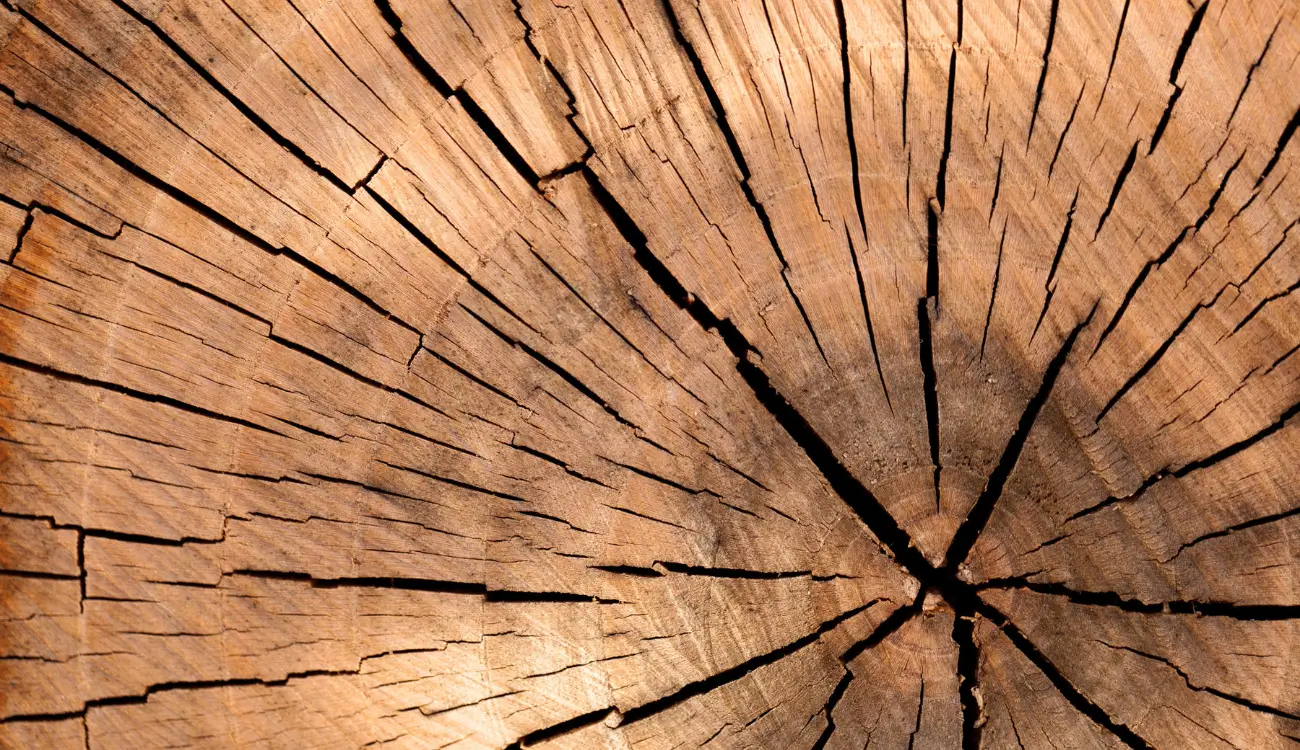
Grain density refers to the tightness of the annual growth rings in oak wood. Each year of a tree's life produces one growth ring — a band of new wood cells laid down during the growing season. The width of each ring reflects how much the tree grew that year. Slow growth produces narrow, tightly spaced rings. Fast growth produces wide, widely spaced rings.
The density and spacing of these rings is what winemakers and cooperages refer to as "grain." Tight grain — many narrow rings per centimeter of wood — indicates slow growth. Wide grain — few wide rings per centimeter — indicates fast growth.
This seemingly simple physical characteristic has significant downstream consequences for how the wood behaves in wine. Understanding why requires understanding what grain density controls at the cellular level.
How Grain Density Is Measured
In cooperage, grain density is traditionally measured by counting the number of annual growth rings visible in a cross-section of the wood, expressed as rings per centimeter. Premium French cooperage standards typically require:
Tight grain: 4+ rings per centimeter
Medium grain: 2–4 rings per centimeter
Wide grain: Fewer than 2 rings per centimeter
American oak (Quercus alba) from the Appalachian region typically falls in the medium range — 2–4 rings per centimeter. French oak (Quercus petraea) from Bercé and Orléans typically falls in the tight to very tight range — 4–8+ rings per centimeter.
These are not absolute categories — there is significant variation within each species and region. A particularly slow-growing American oak tree from a high-elevation Appalachian site may have tighter grain than an average-growth French oak from a faster-growing forest section. But the species and regional averages are consistent enough to use as meaningful quality predictors.
What Determines Grain Density
Grain density is established in the forest by growing conditions. It cannot be changed by processing, seasoning, or toasting. The variables that determine grain density:
Climate
Cooler temperatures produce shorter growing seasons and slower growth — tighter rings. Warmer climates produce longer growing seasons and faster growth — wider rings. This is the primary reason French oak from central France is tighter-grained than American oak from warmer growing regions.
Soil fertility
Rich, well-watered soils support faster growth — wider rings. Poor-to-moderate fertility soils slow growth — tighter rings. Orléans' sandy, acidic soils produce slower growth than the same species in richer soils.
Elevation
Higher elevation growing sites experience cooler temperatures and shorter growing seasons — producing tighter grain than lower-elevation sites in the same region.
Competition
Trees growing in dense forest competition for light grow more slowly and more uniformly than open-grown trees. Managed forests that maintain appropriate tree density produce more consistently tight-grained wood than forests where tree density is poorly managed.
Tree age
Older trees generally grow more slowly than younger trees and therefore tend toward tighter grain. This is one reason that premium cooperage oak requires trees of 80–150 years maturity — younger trees from the same species and region will have wider grain.
Grain Density by Species
Species is the primary determinant of grain density range, before growing conditions are considered.
American white oak — Quercus alba
Quercus alba is a relatively fast-growing species with naturally wider grain than European oak. Its wood structure includes tyloses — cellular plugs that fill the wood pores and make the wood relatively watertight despite its open grain. This watertightness made it attractive for early cooperage, but its wider grain produces faster extraction and less consistency than French oak.
Typical grain range in premium Appalachian material: 2–4 rings/cm. In faster-growing southern American sources: 1–2 rings/cm or less.
French sessile oak — Quercus petraea
Quercus petraea is a slower-growing species with naturally tighter grain than American oak. Its wood structure is denser and more closed — internal diffusion is slower, extraction is more gradual and controlled.
Typical grain range in premium Bercé and Orléans material: 4–8 rings/cm. The finest Bercé material can exceed 8 rings/cm — exceptionally tight even by French oak standards.
Hungarian oak — Quercus frainetto
Hungarian oak falls between American and French in grain density — typically 3–5 rings/cm from premium growing regions. This intermediate grain density is part of what gives Hungarian oak its useful middle-ground extraction profile — faster than French but more controlled than American.
Grain Density by Growing Region
Within each species, growing region produces meaningful variation in grain density.
American oak: Appalachian vs. other regions
| Region | Typical Grain (rings/cm) | Quality Tier |
| Appalachian | 2-4 | Premium |
| Missouri Ozarks | 2-3 | Good |
| Mississippi Valley | 1-2 | Standard |
| Southern plantation | 1-2 | Commodity |
The Appalachian premium is real and measurable. OCI's sourcing from this region specifically — rather than from undifferentiated American oak supply — reflects the grain density advantage that Appalachian growing conditions produce.
French oak: Forest to forest variation
| Forest | Species | Typical Grain (rings/cm) | Notes |
| Forêt de Bercé | Q. petraea | 5-8+ | Premium — finest in France |
| Forêt d'Orléans | Q. petraea/robur | 4-6 | Premium — consistent quality |
| Allier | Q. petraea | 4-6 | Premium — well-known cooperage source |
| Limousin | Q. robur | 2-4 | Medium — wider grain, higher lactone |
| Vosges | Q. petraea | 4-7 | Premium — cold climate, tight grain |
Bercé and Orléans — OCI's French sources — are at the premium end of the French oak grain spectrum. This is part of what makes them desirable sources for quality alternative production.
How Grain Affects Extraction
Grain density's most direct effect on winemaking is its control over extraction speed — how fast oak compounds move from wood into wine.
Internal diffusion — the movement of compounds from the wood's interior toward its surface — must travel through the wood's cellular matrix. Tighter grain means more ring boundaries per unit of distance — more structural interfaces that slow the diffusion pathway. Wider grain means fewer ring boundaries — less resistance to internal diffusion.
The practical result: tight-grained French oak extracts its flavor and tannin compounds more slowly than wider-grained American oak, even at identical dosage and contact conditions. This is one of the primary reasons French oak is described as more "subtle" or "integrated" — not just because of its different compound profile, but because those compounds are delivered more gradually and therefore integrate more seamlessly into the wine's structure.
Implications for contact time:
Tight-grained French oak: slower initial extraction, longer plateau of meaningful extraction, more time to observe and adjust
Medium-grained Appalachian American oak: faster initial extraction, requires closer monitoring in the first 7–10 days
Wide-grained lower-quality oak: fastest extraction, least predictable, highest risk of over-extraction before the winemaker can respond
This is why contact time guidelines — and the tasting schedules built around them — differ between oak types. It is also why inconsistent grain density within a product lot produces variable extraction behavior from batch to batch.
How Grain Affects Compound Concentration
Beyond extraction speed, grain density also affects the concentration and distribution of flavor-active compounds within the wood.
Ellagitannins
Research on French oak has shown that tighter-grained wood tends toward higher ellagitannin concentration per unit of volume. This is not a universal law — species effects dominate over grain effects for ellagitannin content — but within a species, tighter grain correlates with more consistent and often higher ellagitannin distribution.
Aromatic compounds
The distribution of aromatic precursors within the wood is more uniform in tight-grained material than in wide-grained material. Wide-grained wood may have pockets of high and low compound concentration that produce variable extraction results — particularly problematic in alternative formats where the wood surface is cut across grain rather than split along it.
Tannin character
Tighter grain correlates with finer, more integrated tannin character — the result of slower compound release and better-distributed ellagitannin interaction with wine components. Wide-grain material tends to produce broader, more aggressive tannin character even at equivalent dosage.
Grain and Barrel Quality — The Cooperage Standard
In traditional cooperage, grain density selection is one of the most rigorous quality steps in the barrel production process. Premium French cooperages grade every stave by grain density before use — rejecting material that does not meet minimum rings-per-centimeter specifications.
This is why premium barrels from prestigious cooperages consistently outperform commodity barrels in quality evaluations — the wood selection standards are fundamentally different. A barrel from Seguin Moreau or François Frères is built from staves that have been individually graded for grain density. A commodity barrel may not have been.
Oak alternative producers face the same quality decision — whether to source and select wood to grain density specifications or to use undifferentiated supply that may include wide-grained material that extracts unpredictably.
OCI's sourcing from the Appalachian region and from Bercé and Orléans specifically is, in part, a grain density decision — these sources consistently produce wood within the premium grain density ranges for their respective species. This sourcing discipline is the alternative producer's equivalent of the cooperage's stave grading process.
Grain and Alternative Quality
For oak alternative products — chips, cubes, staves, spirals — grain density affects quality in the same ways it affects barrel quality, with one additional consideration: alternative formats cut the wood in ways that expose grain cross-sections that barrel staves do not.
A chip or cube cut from tight-grained wood will have more consistent compound distribution across its cut surfaces than a chip or cube cut from wide-grained wood. The cross-grain cuts that produce chips and cubes expose the full range of the wood's grain variation — which means the grain consistency of the source material directly affects the extraction consistency of the final product.
This is part of why sourcing from premium, consistent-grain sources matters even more for alternative producers than for cooperages — because the cutting process magnifies grain inconsistency rather than reducing it.
Evaluating Grain in Oak Alternatives
For winemakers, direct grain evaluation requires breaking open a chip or cube and examining the cross-section — which is possible but not the most practical quality assessment tool. More accessible approaches:
Visual color consistency
Tight-grained wood, when toasted, shows more even color distribution across the cut surface. Wide-grained wood may show uneven color — lighter where pores are larger, darker where grain is tighter.
Aromatic consistency
A properly grain-sorted lot of oak alternatives will have a consistent aromatic profile across multiple chips sampled from the same bag. Wide aromatic variation between individual pieces suggests inconsistent grain in the source material.
Bench trial behavior
The most reliable grain quality indicator is extraction consistency in a bench trial. Tight, consistent-grain material extracts predictably — the wine at day 7 and day 14 shows consistent progression. Inconsistent grain material may show erratic extraction — more than expected at one interval, less at the next.
Final Thoughts
Grain density is the silent quality variable that underlies every oak decision a winemaker makes — the upstream physical characteristic that determines extraction speed, compound distribution, tannin character, and batch-to-batch consistency. It is established in the forest and cannot be changed by any subsequent production step.
Understanding grain density gives winemakers a framework for evaluating oak suppliers beyond the product description — asking not just "what species and toast level?" but "where was it grown, and what is the grain consistency of the source material?" Those questions separate genuinely premium oak from commodity alternatives that may carry the same labels.
OCI's sourcing from the Appalachian region and from Forêt de Bercé and Forêt d'Orléans is, at its core, a grain density commitment — a decision to build our products from wood that meets the grain consistency standards that predictable, high-quality winemaking results require.
Let our team choose the right oak for your winemaking or brewing project!
Reach out to our team or explore our wide selection of premium American and French oak barrel alternatives to enhance your beverages while also saving money compared to relying solely on traditional barrel aging!

by Brandon Haas
Published on 08/18/2026
Share Article
POPULAR POSTS
OAK ALTERNATIVES
How Long Should You Age Wine With Oak Chips?
NEWS/UPDATES
The Oak Scoop: May 2026
USING OAK IN WINEMAKING
What is Harvest and Why is it Important to Winemakers?
OAK SCIENCE
5 Ways To Make Your Alcohol Taste Better
by Brandon Haas
Published on 08/18/2026
Unsubscribe anytime. By entering your email, you agree to receive marketing emails from Oak Chips Inc. By proceeding, you agree to the Terms and Conditions and Privacy Policy.
POPULAR POSTS
OAK ALTERNATIVES
How Long Should You Age Wine With Oak Chips?
NEWS/UPDATES
The Oak Scoop: May 2026
USING OAK IN WINEMAKING
What is Harvest and Why is it Important to Winemakers?
OAK SCIENCE
5 Ways To Make Your Alcohol Taste Better