
ON THIS PAGE
Age your wine with oak.
- Shop Now
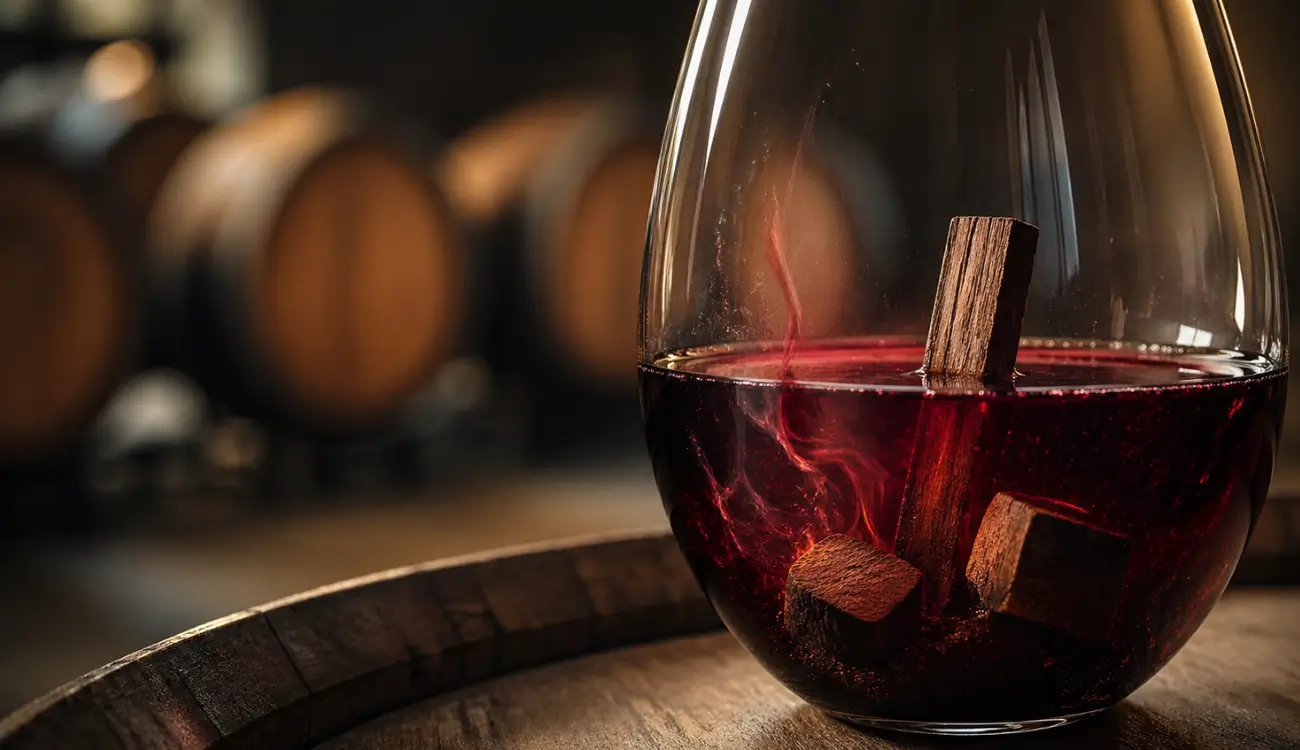
Oak extraction is the process at the heart of every oak aging program—the transfer of chemical compounds from wood into wine. It sounds straightforward. Wood goes in, compounds come out, wine changes. But the science of how that transfer actually occurs, what governs its rate, and what happens to those compounds once they enter the wine is considerably more nuanced.
Understanding extraction science gives winemakers a genuine mechanistic understanding of their oak program—not just what to do, but why it works. That understanding is what allows for precise, predictable, and repeatable results across vintages.
What Is Oak Extraction?
Extraction is the movement of soluble compounds from the solid matrix of wood into the liquid matrix of wine. The driving force behind this movement is the concentration gradient—compounds naturally move from areas of higher concentration toward areas of lower concentration until equilibrium is reached.
In practical terms: at the moment oak contacts wine, the wood contains high concentrations of ellagitannins, vanillin, lactones, guaiacol, eugenol, furfural, and dozens of other compounds. The wine contains none of these compounds initially. The steep concentration gradient between wood and wine drives rapid diffusion of these compounds into the liquid.
As extraction proceeds, the gradient narrows. The wine's concentration of oak compounds increases. The wood's available surface concentration decreases as compounds are depleted. Extraction rate slows progressively until equilibrium—or until the oak is removed.
This is why oak extraction is fastest at the beginning of contact and decelerates over time. And it is why contact time management requires active tasting rather than a fixed schedule—the rate of change in the wine is not constant across the contact period.
The Physics of Diffusion
Diffusion in oak extraction occurs through two pathways simultaneously.
Surface diffusion — compounds dissolved in the wine's liquid phase move along the wood surface and into the surrounding wine. This is the fastest extraction pathway and is responsible for the rapid early delivery of aromatic compounds in the first days of contact.
Internal diffusion — compounds migrate from the interior of the wood through the grain structure toward the surface, where they then diffuse into the wine. This pathway is slower because it depends on the physical structure of the wood—specifically its grain density and porosity.
This is why grain structure matters so significantly in oak species selection. French oak's tighter grain creates more resistance to internal diffusion—compounds migrate more slowly from the wood's interior to its surface. American oak's wider, more open grain allows faster internal diffusion. The practical result: American oak extracts faster and delivers more compound per unit of time at equivalent dosage, while French oak extracts more slowly and gradually.
The combination of surface and internal diffusion means that extraction is never a simple one-dimensional process. Different compound classes—with different molecular weights, solubilities, and positions within the wood structure—diffuse at different rates, which is what creates the changing character of the wine over the course of the contact period.
What Factors Control Extraction Rate
Six primary variables govern how fast oak compounds move from wood into wine:
1. Surface Area: The single most controllable extraction variable. More surface area exposed to wine per unit of oak weight means faster diffusion across a larger interface. Chips have dramatically more surface area per pound than staves, which is why chips extract in days and staves extract over weeks.
2. Temperature: Molecular diffusion rates increase with temperature. Warmer wine extracts oak compounds faster than cooler wine at identical dosage and contact time. This has direct practical implications: wines stored in warm cellars during oak contact will extract faster than the same wine in a cooler cellar. Seasonal variation in cellar temperature is a variable that experienced winemakers factor into their contact time protocols.
3. Alcohol Content: Alcohol significantly affects the solubility of hydrophobic oak compounds—particularly lactones, which are the primary coconut and wood-character contributors in American oak. Higher alcohol wine dissolves and transports these compounds more efficiently. This is why spirits extract oak character much faster than wine, and why higher-alcohol wines (14–15%+ ABV) may need shorter contact times than lower-alcohol wines at equivalent dosage.
4. Wood Porosity and Grain Density: Governs internal diffusion rate. Tighter-grained wood (French oak) requires more time for internal compound migration. Wider-grained wood (American oak) allows faster migration. This variable is fixed by species and growing conditions—winemakers select for it by choosing oak origin.
5. Wine Acidity (pH): pH affects the ionization state and reactivity of phenolic compounds in both the wood and the wine. Lower pH (higher acidity) generally stabilizes anthocyanins and certain phenolics, affecting how quickly they react with incoming oak compounds. Higher pH wines may extract some compound classes more readily. The practical impact is wine-specific and requires bench trial data to fully characterize.
6. Agitation: Still wine extracts more slowly than agitated wine because a depletion zone—an area of locally high oak compound concentration—forms immediately adjacent to the wood surface. In barrels, manual stirring (bâtonnage) or racking disrupts this zone and refreshes the concentration gradient. In tank programs with staves, gentle circulation achieves the same effect.
What Extracts When — The Extraction Timeline
One of the most important insights in extraction science is that different compound classes extract at different rates. The wine's character changes progressively over the contact period—not uniformly.
Days 1–5 - Volatile aromatic compounds: The first compounds to appear in meaningful concentrations are the most volatile aromatic molecules—light vanillin fractions, the most soluble lactone isomers, and surface-level guaiacol and eugenol. The wine develops early aromatic lift—fresh vanilla, spice, a hint of wood—almost immediately.
Days 5–14 - Full aromatic expression + tannin onset: Aromatic compound extraction reaches its peak contribution in this window. Vanillin, furfural, and lactone concentrations build substantially. Simultaneously, ellagitannin extraction from the wood surface accelerates as surface aromatic compounds are depleted and the concentration gradient for tannin compounds steepens. The wine begins to show structural change—added weight on the mid-palate, early tannin integration.
Days 14–30 - Tannin dominance, aromatic plateau: Aromatic extraction slows as surface concentrations equilibrate. Tannin extraction continues as compounds migrate from deeper in the wood grain. Structural development now leads the sensory change. Chips and cubes are largely delivering their tannin contribution in this window.
Weeks 4–12+ - Deep structural integration: For longer-format oak programs, this is where the most important chemistry occurs. Internal diffusion from stave interiors continues delivering ellagitannins. Simultaneously, the micro-oxygenation effect of wood in contact with wine drives tannin polymerization and color stabilization. The compounds entering the wine at this stage feel increasingly integrated—less "added" and more structural.
Beyond 12 weeks: Most chips and cube formats are largely spent—their available surface and internal compounds have been depleted or have reached equilibrium with the wine. Continued contact offers minimal additional extraction and increasing risk of off-character development from depleted, potentially degrading wood surface. Staves may continue contributing for 16+ weeks depending on format and wine volume.
Surface Area and Format
The relationship between surface area and extraction rate is the scientific foundation of format selection. Every format decision is ultimately a decision about how fast you want extraction to proceed.
The higher the surface area, the steeper the initial concentration gradient and the faster the early extraction rate. This is why chips require tasting at 5-day intervals while staves require tasting every two weeks—the rate of change in the wine is fundamentally different between formats.
Temperature and Extraction
Temperature's effect on extraction rate is significant enough to warrant its own management consideration. The relationship is not perfectly linear, but as a practical guideline: for every 10°C (18°F) increase in wine temperature, diffusion rates approximately double.
Practical implications:
-
- A wine at 20°C (68°F) cellar temperature during oak contact will extract approximately twice as fast as the same wine at 10°C (50°F)
- Summer oak programs in warm cellars require shorter contact times than the same program in winter
- Temperature fluctuations during a single contact period create variable extraction rates—which is why consistent cellar temperature control improves protocol reproducibility
Most winemakers are aware of temperature's effect on fermentation but underestimate its effect on post-fermentation oak programs. Building cellar temperature data into your oak contact time protocols improves consistency vintage to vintage.
Alcohol, Acidity, and Wine Chemistry
Beyond temperature, the wine's own chemistry shapes extraction behavior in ways that vary from vintage to vintage and lot to lot.
Alcohol and lactone solubility: Oak lactones—the primary coconut and wood-character compounds—are hydrophobic. They dissolve poorly in water but readily in alcohol. Higher-ABV wines extract lactones more efficiently, which is why American oak's characteristic profile is more pronounced in higher-alcohol wines. In lower-alcohol wines, the same American oak product at the same dosage will deliver less lactone intensity.
pH and phenolic stability: Lower pH wines (higher acidity) stabilize certain phenolic forms that are more reactive with ellagitannins—potentially affecting the rate and completeness of tannin polymerization reactions. Higher pH wines have a different phenolic equilibrium. This variable is difficult to generalize across all wines but is relevant for winemakers working with unusually high or low-acid lots.
Sulfur dioxide: Free SOâ‚‚ in the wine acts as an antioxidant, competing with oxygen-dependent reactions including some tannin polymerization pathways. Very high free SOâ‚‚ levels can moderately slow the micro-oxygenation-driven polymerization that stave programs rely on. This is not typically a limiting factor at normal cellar SOâ‚‚ levels but is worth noting for extended stave programs.
Extraction to Integration — What Happens After
Extraction and integration are distinct processes. Extraction is the movement of compounds from wood into wine. Integration is what happens to those compounds once they are in the wine—how they react with existing phenolics, how they modify the wine's structure, and how the wine's sensory character evolves as a result.
Integration is slower than extraction. A compound can be extracted from wood in days, but its full integration into the wine's structural and aromatic framework may take weeks or months. This is why wines that are pulled from oak contact at sensory target often continue developing in a positive direction for weeks afterward—the compounds are present, but their full reaction and integration is ongoing.
This distinction has one important practical implication: do not re-add oak immediately after pulling if the wine still tastes slightly under-oaked at removal. Allow 10–14 days for existing oak compounds to integrate before evaluating the wine's true profile. Many apparent under-oaking events resolve themselves in this window.
Controlling Extraction in Practice
The science of extraction translates into a small number of practical protocols that make oak programs more precise and reproducible:
1. Choose format based on desired extraction pace. Chips for fast, measurable results. Staves for extended, integrated programs. Match the format to the production timeline and the wine's structural needs.
2. Set tasting intervals based on format. Days 5, 10, and 14 for chips. Every 2 weeks for staves. These intervals correspond to meaningful points in the extraction timeline—where the rate of change is high enough to warrant evaluation and decision.
3. Account for cellar temperature. If your cellar runs warm in summer, plan for shorter contact times or lower initial dosages during summer programs. Document temperature alongside oak addition records for reproducible protocols.
4. Start conservative on dosage. Extraction rate is not fully predictable across different lots, vintages, or cellar conditions. Starting low gives room to observe and adjust before the wine exceeds its target.
5. Allow integration time after removal. Pull at sensory target, then allow 10–14 days before re-evaluating. This prevents over-correction based on an incompletely integrated oak addition.
Final Thoughts
Oak extraction is governed by fundamental physical and chemical principles—concentration gradients, diffusion rates, compound solubility, temperature, and molecular reactivity. None of these are mysterious or unpredictable. They are the variables that determine what happens in the wine during every hour of oak contact.
Winemakers who understand these principles make better format choices, set more appropriate contact time intervals, and build more consistent protocols across vintages. The science doesn't replace sensory evaluation—it makes sensory evaluation more informative, because you understand what is happening in the wine at every stage.
Let's get you the right oak for your wine!
Explore our wide selection of premium oak alternatives to find the right fit for your wine!
FAQ
Q: What is oak extraction in winemaking? Oak extraction is the process by which flavor, aroma, and structural compounds move from wood into wine through diffusion. It is driven by the concentration gradient between the wood (high concentration) and the wine (initially zero).
Q: What makes extraction faster or slower? Surface area, temperature, alcohol content, wood grain density, and wine pH all affect extraction rate. Higher surface area and warmer temperatures accelerate extraction; tighter grain and lower temperatures slow it.
Q: Do different oak compounds extract at the same rate? No. Volatile aromatics extract first (days 1–7), followed by tannins and structural compounds (days 7–30+). This is why the sensory character of wine changes progressively throughout the contact period.
Q: Why does French oak extract more slowly than American oak? French oak has a tighter grain structure, which creates more resistance to internal diffusion—the movement of compounds from the wood's interior to its surface. American oak's wider grain allows faster internal migration.
Q: How long does extraction take? It depends on format. Chips largely complete extraction in 5–14 days. Cubes in 2–4 weeks. Staves continue extracting meaningfully for 4–16 weeks. Beyond these windows, extraction rates drop significantly and risk of off-character development increases.

by Brandon Haas
Published on 05/15/2026
Share Article
POPULAR POSTS
OAK ALTERNATIVES
How Long Should You Age Wine With Oak Chips?
NEWS/UPDATES
The Oak Scoop: May 2026
USING OAK IN WINEMAKING
What is Harvest and Why is it Important to Winemakers?
OAK SCIENCE
5 Ways To Make Your Alcohol Taste Better
by Brandon Haas
Published on 05/15/2026
Unsubscribe anytime. By entering your email, you agree to receive marketing emails from Oak Chips Inc. By proceeding, you agree to the Terms and Conditions and Privacy Policy.
POPULAR POSTS
OAK ALTERNATIVES
How Long Should You Age Wine With Oak Chips?
NEWS/UPDATES
The Oak Scoop: May 2026
USING OAK IN WINEMAKING
What is Harvest and Why is it Important to Winemakers?
OAK SCIENCE
5 Ways To Make Your Alcohol Taste Better
ON THIS PAGE
Age your wine with oak.
- Shop Now
Oak extraction is the process at the heart of every oak aging program—the transfer of chemical compounds from wood into wine. It sounds straightforward. Wood goes in, compounds come out, wine changes. But the science of how that transfer actually occurs, what governs its rate, and what happens to those compounds once they enter the wine is considerably more nuanced.
Understanding extraction science gives winemakers a genuine mechanistic understanding of their oak program—not just what to do, but why it works. That understanding is what allows for precise, predictable, and repeatable results across vintages.
What Is Oak Extraction?
Extraction is the movement of soluble compounds from the solid matrix of wood into the liquid matrix of wine. The driving force behind this movement is the concentration gradient—compounds naturally move from areas of higher concentration toward areas of lower concentration until equilibrium is reached.
In practical terms: at the moment oak contacts wine, the wood contains high concentrations of ellagitannins, vanillin, lactones, guaiacol, eugenol, furfural, and dozens of other compounds. The wine contains none of these compounds initially. The steep concentration gradient between wood and wine drives rapid diffusion of these compounds into the liquid.
As extraction proceeds, the gradient narrows. The wine's concentration of oak compounds increases. The wood's available surface concentration decreases as compounds are depleted. Extraction rate slows progressively until equilibrium—or until the oak is removed.
This is why oak extraction is fastest at the beginning of contact and decelerates over time. And it is why contact time management requires active tasting rather than a fixed schedule—the rate of change in the wine is not constant across the contact period.
The Physics of Diffusion
Diffusion in oak extraction occurs through two pathways simultaneously.
Surface diffusion — compounds dissolved in the wine's liquid phase move along the wood surface and into the surrounding wine. This is the fastest extraction pathway and is responsible for the rapid early delivery of aromatic compounds in the first days of contact.
Internal diffusion — compounds migrate from the interior of the wood through the grain structure toward the surface, where they then diffuse into the wine. This pathway is slower because it depends on the physical structure of the wood—specifically its grain density and porosity.
This is why grain structure matters so significantly in oak species selection. French oak's tighter grain creates more resistance to internal diffusion—compounds migrate more slowly from the wood's interior to its surface. American oak's wider, more open grain allows faster internal diffusion. The practical result: American oak extracts faster and delivers more compound per unit of time at equivalent dosage, while French oak extracts more slowly and gradually.
The combination of surface and internal diffusion means that extraction is never a simple one-dimensional process. Different compound classes—with different molecular weights, solubilities, and positions within the wood structure—diffuse at different rates, which is what creates the changing character of the wine over the course of the contact period.
What Factors Control Extraction Rate
Six primary variables govern how fast oak compounds move from wood into wine:
1. Surface Area: The single most controllable extraction variable. More surface area exposed to wine per unit of oak weight means faster diffusion across a larger interface. Chips have dramatically more surface area per pound than staves, which is why chips extract in days and staves extract over weeks.
2. Temperature: Molecular diffusion rates increase with temperature. Warmer wine extracts oak compounds faster than cooler wine at identical dosage and contact time. This has direct practical implications: wines stored in warm cellars during oak contact will extract faster than the same wine in a cooler cellar. Seasonal variation in cellar temperature is a variable that experienced winemakers factor into their contact time protocols.
3. Alcohol Content: Alcohol significantly affects the solubility of hydrophobic oak compounds—particularly lactones, which are the primary coconut and wood-character contributors in American oak. Higher alcohol wine dissolves and transports these compounds more efficiently. This is why spirits extract oak character much faster than wine, and why higher-alcohol wines (14–15%+ ABV) may need shorter contact times than lower-alcohol wines at equivalent dosage.
4. Wood Porosity and Grain Density: Governs internal diffusion rate. Tighter-grained wood (French oak) requires more time for internal compound migration. Wider-grained wood (American oak) allows faster migration. This variable is fixed by species and growing conditions—winemakers select for it by choosing oak origin.
5. Wine Acidity (pH): pH affects the ionization state and reactivity of phenolic compounds in both the wood and the wine. Lower pH (higher acidity) generally stabilizes anthocyanins and certain phenolics, affecting how quickly they react with incoming oak compounds. Higher pH wines may extract some compound classes more readily. The practical impact is wine-specific and requires bench trial data to fully characterize.
6. Agitation: Still wine extracts more slowly than agitated wine because a depletion zone—an area of locally high oak compound concentration—forms immediately adjacent to the wood surface. In barrels, manual stirring (bâtonnage) or racking disrupts this zone and refreshes the concentration gradient. In tank programs with staves, gentle circulation achieves the same effect.
What Extracts When — The Extraction Timeline
One of the most important insights in extraction science is that different compound classes extract at different rates. The wine's character changes progressively over the contact period—not uniformly.
Days 1–5 - Volatile aromatic compounds: The first compounds to appear in meaningful concentrations are the most volatile aromatic molecules—light vanillin fractions, the most soluble lactone isomers, and surface-level guaiacol and eugenol. The wine develops early aromatic lift—fresh vanilla, spice, a hint of wood—almost immediately.
Days 5–14 - Full aromatic expression + tannin onset: Aromatic compound extraction reaches its peak contribution in this window. Vanillin, furfural, and lactone concentrations build substantially. Simultaneously, ellagitannin extraction from the wood surface accelerates as surface aromatic compounds are depleted and the concentration gradient for tannin compounds steepens. The wine begins to show structural change—added weight on the mid-palate, early tannin integration.
Days 14–30 - Tannin dominance, aromatic plateau: Aromatic extraction slows as surface concentrations equilibrate. Tannin extraction continues as compounds migrate from deeper in the wood grain. Structural development now leads the sensory change. Chips and cubes are largely delivering their tannin contribution in this window.
Weeks 4–12+ - Deep structural integration: For longer-format oak programs, this is where the most important chemistry occurs. Internal diffusion from stave interiors continues delivering ellagitannins. Simultaneously, the micro-oxygenation effect of wood in contact with wine drives tannin polymerization and color stabilization. The compounds entering the wine at this stage feel increasingly integrated—less "added" and more structural.
Beyond 12 weeks: Most chips and cube formats are largely spent—their available surface and internal compounds have been depleted or have reached equilibrium with the wine. Continued contact offers minimal additional extraction and increasing risk of off-character development from depleted, potentially degrading wood surface. Staves may continue contributing for 16+ weeks depending on format and wine volume.
Surface Area and Format
The relationship between surface area and extraction rate is the scientific foundation of format selection. Every format decision is ultimately a decision about how fast you want extraction to proceed.
The higher the surface area, the steeper the initial concentration gradient and the faster the early extraction rate. This is why chips require tasting at 5-day intervals while staves require tasting every two weeks—the rate of change in the wine is fundamentally different between formats.
Temperature and Extraction
Temperature's effect on extraction rate is significant enough to warrant its own management consideration. The relationship is not perfectly linear, but as a practical guideline: for every 10°C (18°F) increase in wine temperature, diffusion rates approximately double.
Practical implications:
-
- A wine at 20°C (68°F) cellar temperature during oak contact will extract approximately twice as fast as the same wine at 10°C (50°F)
- Summer oak programs in warm cellars require shorter contact times than the same program in winter
- Temperature fluctuations during a single contact period create variable extraction rates—which is why consistent cellar temperature control improves protocol reproducibility
Most winemakers are aware of temperature's effect on fermentation but underestimate its effect on post-fermentation oak programs. Building cellar temperature data into your oak contact time protocols improves consistency vintage to vintage.
Alcohol, Acidity, and Wine Chemistry
Beyond temperature, the wine's own chemistry shapes extraction behavior in ways that vary from vintage to vintage and lot to lot.
Alcohol and lactone solubility: Oak lactones—the primary coconut and wood-character compounds—are hydrophobic. They dissolve poorly in water but readily in alcohol. Higher-ABV wines extract lactones more efficiently, which is why American oak's characteristic profile is more pronounced in higher-alcohol wines. In lower-alcohol wines, the same American oak product at the same dosage will deliver less lactone intensity.
pH and phenolic stability: Lower pH wines (higher acidity) stabilize certain phenolic forms that are more reactive with ellagitannins—potentially affecting the rate and completeness of tannin polymerization reactions. Higher pH wines have a different phenolic equilibrium. This variable is difficult to generalize across all wines but is relevant for winemakers working with unusually high or low-acid lots.
Sulfur dioxide: Free SOâ‚‚ in the wine acts as an antioxidant, competing with oxygen-dependent reactions including some tannin polymerization pathways. Very high free SOâ‚‚ levels can moderately slow the micro-oxygenation-driven polymerization that stave programs rely on. This is not typically a limiting factor at normal cellar SOâ‚‚ levels but is worth noting for extended stave programs.
Extraction to Integration — What Happens After
Extraction and integration are distinct processes. Extraction is the movement of compounds from wood into wine. Integration is what happens to those compounds once they are in the wine—how they react with existing phenolics, how they modify the wine's structure, and how the wine's sensory character evolves as a result.
Integration is slower than extraction. A compound can be extracted from wood in days, but its full integration into the wine's structural and aromatic framework may take weeks or months. This is why wines that are pulled from oak contact at sensory target often continue developing in a positive direction for weeks afterward—the compounds are present, but their full reaction and integration is ongoing.
This distinction has one important practical implication: do not re-add oak immediately after pulling if the wine still tastes slightly under-oaked at removal. Allow 10–14 days for existing oak compounds to integrate before evaluating the wine's true profile. Many apparent under-oaking events resolve themselves in this window.
Controlling Extraction in Practice
The science of extraction translates into a small number of practical protocols that make oak programs more precise and reproducible:
1. Choose format based on desired extraction pace. Chips for fast, measurable results. Staves for extended, integrated programs. Match the format to the production timeline and the wine's structural needs.
2. Set tasting intervals based on format. Days 5, 10, and 14 for chips. Every 2 weeks for staves. These intervals correspond to meaningful points in the extraction timeline—where the rate of change is high enough to warrant evaluation and decision.
3. Account for cellar temperature. If your cellar runs warm in summer, plan for shorter contact times or lower initial dosages during summer programs. Document temperature alongside oak addition records for reproducible protocols.
4. Start conservative on dosage. Extraction rate is not fully predictable across different lots, vintages, or cellar conditions. Starting low gives room to observe and adjust before the wine exceeds its target.
5. Allow integration time after removal. Pull at sensory target, then allow 10–14 days before re-evaluating. This prevents over-correction based on an incompletely integrated oak addition.
Final Thoughts
Oak extraction is governed by fundamental physical and chemical principles—concentration gradients, diffusion rates, compound solubility, temperature, and molecular reactivity. None of these are mysterious or unpredictable. They are the variables that determine what happens in the wine during every hour of oak contact.
Winemakers who understand these principles make better format choices, set more appropriate contact time intervals, and build more consistent protocols across vintages. The science doesn't replace sensory evaluation—it makes sensory evaluation more informative, because you understand what is happening in the wine at every stage.
Let's get you the right oak for your wine!
Explore our wide selection of premium oak alternatives to find the right fit for your wine!
FAQ
Q: What is oak extraction in winemaking? Oak extraction is the process by which flavor, aroma, and structural compounds move from wood into wine through diffusion. It is driven by the concentration gradient between the wood (high concentration) and the wine (initially zero).
Q: What makes extraction faster or slower? Surface area, temperature, alcohol content, wood grain density, and wine pH all affect extraction rate. Higher surface area and warmer temperatures accelerate extraction; tighter grain and lower temperatures slow it.
Q: Do different oak compounds extract at the same rate? No. Volatile aromatics extract first (days 1–7), followed by tannins and structural compounds (days 7–30+). This is why the sensory character of wine changes progressively throughout the contact period.
Q: Why does French oak extract more slowly than American oak? French oak has a tighter grain structure, which creates more resistance to internal diffusion—the movement of compounds from the wood's interior to its surface. American oak's wider grain allows faster internal migration.
Q: How long does extraction take? It depends on format. Chips largely complete extraction in 5–14 days. Cubes in 2–4 weeks. Staves continue extracting meaningfully for 4–16 weeks. Beyond these windows, extraction rates drop significantly and risk of off-character development increases.

by Brandon Haas
Published on 05/15/2026
Share Article


